How to start helping your lead reactive dog by changing his emotions
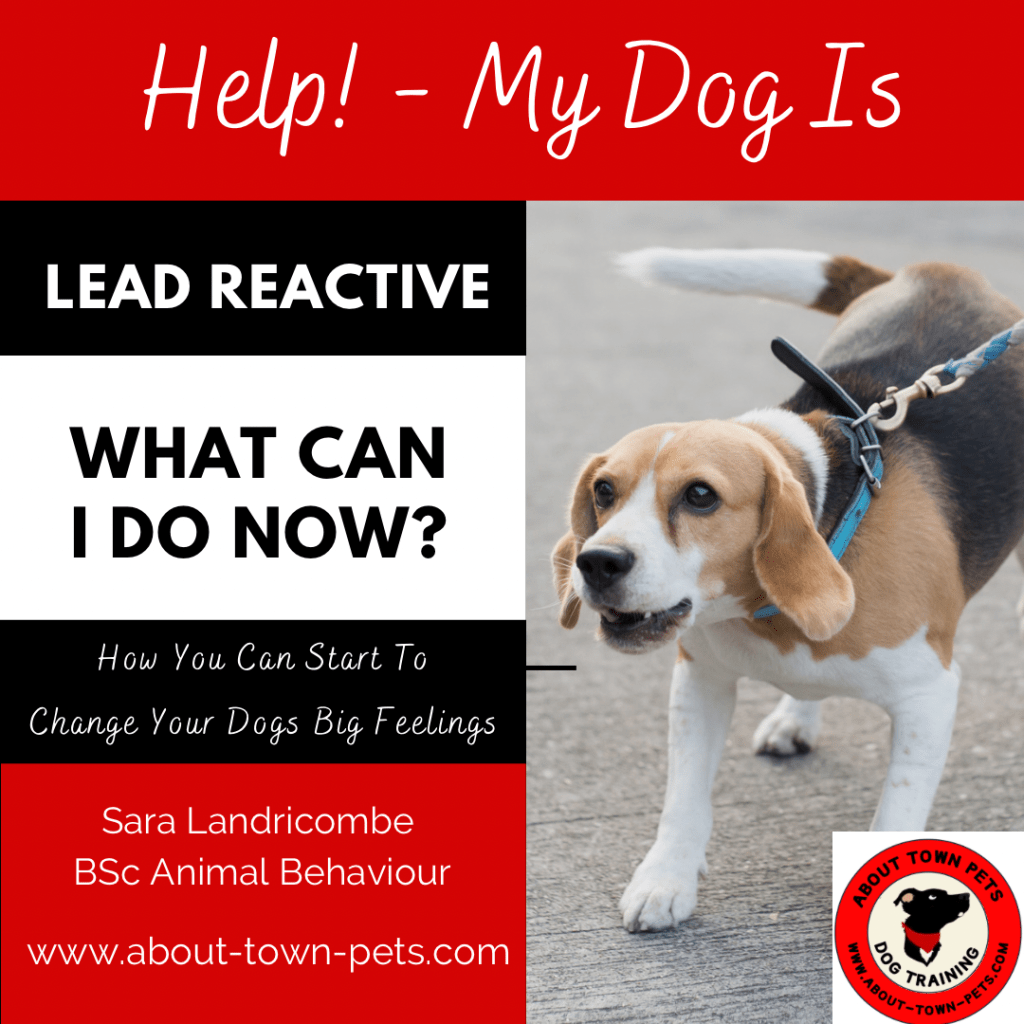
You are not alone , this is a very common occurrence nowadays especially as we have to keep our dogs on a lead in order to keep them under control in public places.
If I want you to take three things away from this post today it’s that:
1- Reactive dogs are not bad dogs
2- Reactive dogs are likely having to resort to this form of communication because their more subtle attempts of appeasement or displacement have gone unnoticed
3- There is NOT a one size fits all approach to these behaviours (every dog is different has their own learned history of events / genetic background/ age / sexual status etc) all need to be taken into account
4- There IS however some underlying emotional state that is going unnoticed or being misinterpreted perhaps.
So let’s begin…..
So you’ve filled in a training and behaviour history questionnaire and we have assessed perhaps likely causes and rule outs and the reactions are not so severe that they require medical intervention and you are waiting to start some training with an experienced and ethical dog trainer or behaviourist. Whilst some simple changes to your dogs lifestyle including diet and enrichment might help – controlled training scenarios and possibly behaviour modification is likely what’s needed at this point.
I am assuming here that you know that letting people or dogs greet your dog for the first time on a taught lead is not ideal and that letting your dogs run up to other dogs in general, but especially ones on leads is actually making their behaviours worse as most do not care for rushed face to face greetings – it’s bad manners if you’re a dog and the reacting dog is sometimes angry about the intrusion into his space.
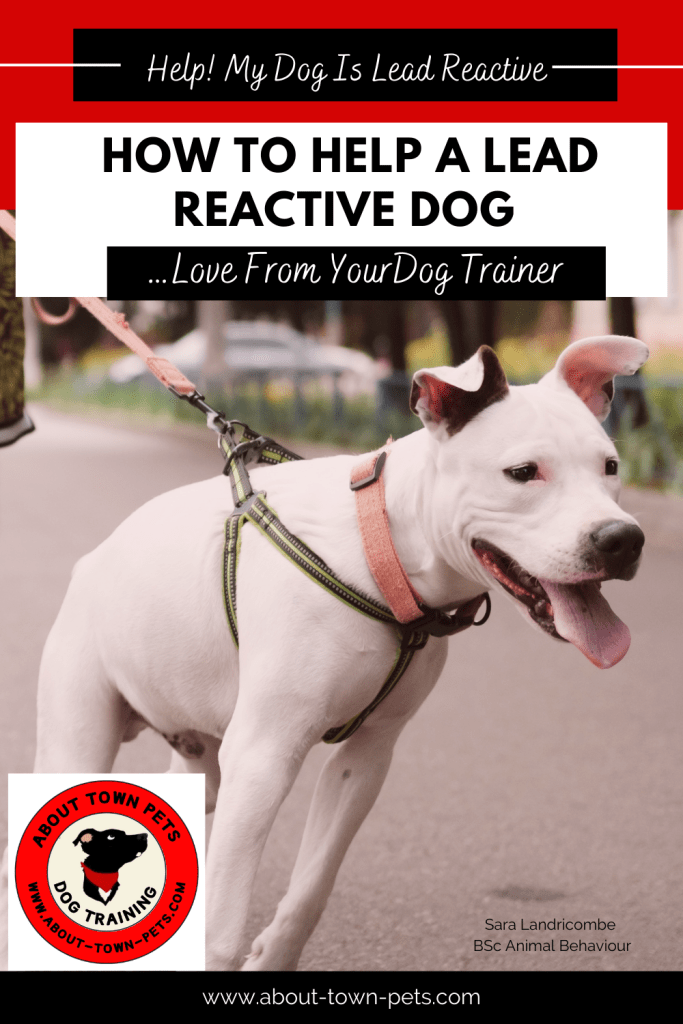
What well adjusted social dogs actually prefer is a behaviour I’ve heard being called “Arcing” where they approach each other from the side whilst giving each other somewhat of a wide berth (this can be seen when you see two dogs go round and round in circle trying to sniff each others butts) and then when they sniffed a butt they quickly go on their merry way – now if we then add a lead we are preventing that free access to the bottom sniff and walking away (we’ve all seen this in the local park when dogs get tangled –
TIP – if safe to do so drop the lead and once they’ve finished their little butt sniffing circle quickly pick said lead back up, gather it up and move on- this is one of the copious reasons I do not like flexi/extendable leads- I digress – can you now see how by adding a taught lead to this scenario we would be taking away that dogs ability to choose a quick exit ? This will often lead to frustration in a dog that really wants to go and say Hi or anxiety in dogs that just want to move away – this spills over into a reaction because nobody’s making this rude obnoxious new comer get out of the way. How can you help your dog with this? I hear you cry -simply ask yourself a series of questions…..
Is your lead long enough? AND do you know how to handle a 6ft lead appropriately ? I ask you this because the lead creates tension if it’s too short – whilst keeping a dog on a short tight lead might feel to you like you have more control in a given situation (and in an emergency situation definitely do this to get past another dog for example) but it is not however , helping that dog feel like he has a choice or conveying calm in the face of something potentially exciting, frustrating or scary (from your dogs perspective).
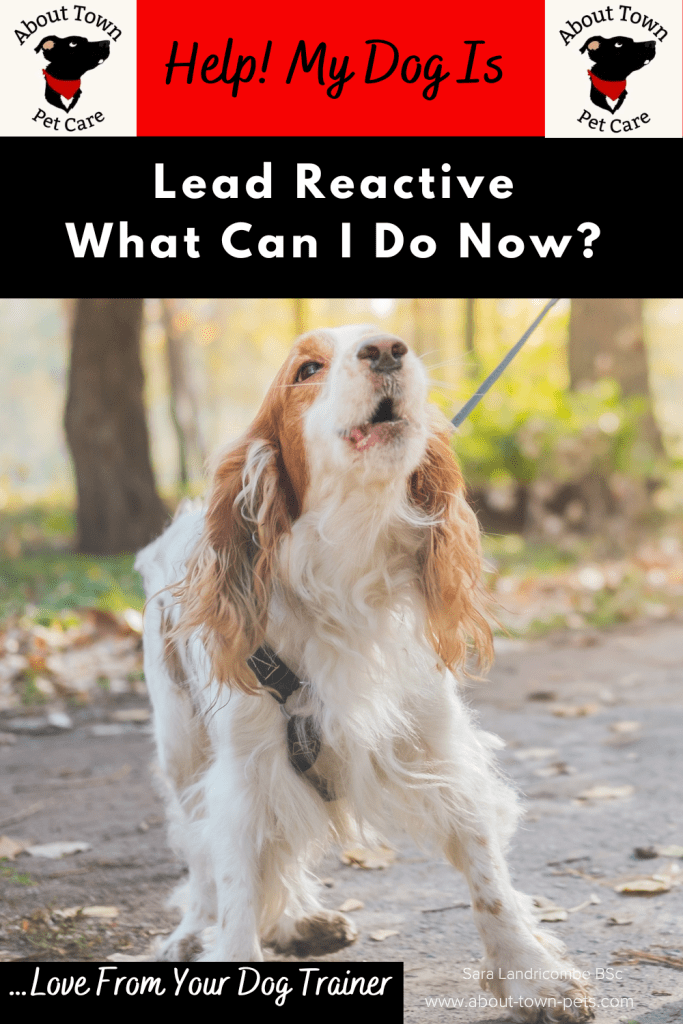
There is a definite way to handle a longer lead in relaxed manner but also having control of that lead should you need to move your dog forward or away from a scenario. You also should attempt to create enough distance so that your dog isn’t having to get to the point that he feels that he has to lunge and therefore make that lead tight- learning your dogs “safe zone” is critical to starting any training . Which leads (no pun intended😅) me to …..
Do you know the distance at which your dog does not react?
This could be the point at which your dog is comfortable enough to simply look over at another dog or person or thing WITHOUT showing signs of worry stress frustration or becoming excitable. This is likely to be the point at which you will be able to get your dog to think straight again by offering some responses to training or even more relaxed body language. It is here we would start our training process and build back up to these places that were previously stressful or too overwhelming for your dog AT THE MOMENT – all is it lost we just need to remember what we THINK our dogs want might not actually be what they WANT at that time.
This is where some of you will shout “my my dog is not food/toy/praise orientated” or insert whatever types of “reward” you have tried before and I’d say that’s ok – all dogs are food motivated at some point – they eat food to live don’t they? So try some of my counter points here
Go back to basics with reward / food based training we might not have been consistent enough, engaging enough with our treat delivery or our timing might be off – increase the VALUE of the reward so boring kibbles might not cut it – but salmon paste might – my dog goes mad for pieces of broccoli 😅try out different types of reward 👍
Is the environment we are in MORE rewarding than me on the lead at this moment – try a less distracting more barren environment to get the basics down (industrial estates on Sunday) are a good idea for practice 👍
Can you make treat delivery more exciting ? And think about the breed of dog you have ….. do you have a scent hound – treat delivery can be on the floor or scattered in long grass (remember to allow enough time for your dog to “find” the treat before doing another rep – don’t rush” Do you have a husky who likes to pretend they are hunting? Throw the treat in the air to find or catch (this is a great tip for Lurchers for example or collies) Do you have a spaniel that just has to keep moving ? Incorporate treat or reward delivery at pace and roll it away from you whilst they are on a long line. Can you see how these methods would make a reluctant dog more engaged in you ?

Every dog is different and it’s up to us to make decisions for our dog to keep their best interests at heart- got a happy go lucky Labrador who wants to say hi to everyone ? Let’s set him up with lots of polite meeting and greeting BEFORE he goes bounding up to potential lead reactive dogs and setting them back and also earning him the title of “Billy No Mates” as the other older dogs will not want to hang out with this big overly friendly dude again and potentially give him a few unpleasant experiences where older dogs might nip at his face to get him to go away (FYI we shouldn’t be expecting other dogs to do our jobs for us) It’s our responsibility to not set anyone else’s dog back just because we haven’t taught our dog polite greetings or recall- they are our responsibility nobody else’s. If this does happen apologise profusely and keep training.
Perhaps you have a 6 year old pug who has a questionable background and lunges out of fear or under exposure when they were young to a variety of people and other dogs – those dogs will benefit from general confidence training and their “Safe Zone” might start from the moment you leave the house because going somewhere busy or overstimulating will cause reactions the minute you leave the home – in this case we would build up to going anywhere at all – this is because this dog has been exhibiting the behaviour for a long time they will have a very well trodden pathway which has created a habit that has gone unaddressed over time – but now we know how to look for the signs of stress and the distance at which it can handle short bursts of training. We can now start to prevent that dog from getting overwhelmed and begin the unlearning (is that a word?) that dog now doesn’t have to go towards the thinggs it doesn’t like – we can actually teach it to engage calmly and make a quick retreat- this dog can do more calming behaviours on walks at a distance from things and then start to work at distance again from the scary things as start to learn they now have a CHOICE and we can begin to build a NEW association with the previously scary things.
Frustration Fear Or Out Of Practice?
Lead reactions are not all created equally. A dog with tight stiff forward body language is different to a dog who barks and tries to run away. A dog that might look loose and happy might simply be barking out of excitement and not any malice but at the same time growling coupled with a bristling wagging tail is a courtesy which usually precedes a lead lunge and a snap because they are actually anxious- so by working with an experienced dog behaviourist you will be able to see if you have a shy nervous and potentially under confident nervous dog as opposed to a highly frustrated dog who doesn’t actually know how to greet properly and their reactions are manifestations of not being allowed to do the thing they want to do (there is lots more to this and I am generalising to a quicker post) but you can see how they are different things that might “look” like a aggressive reaction but there is more going on underneath.
What can you do first and foremost to help your dog before you start working with an experienced dog trainer then?
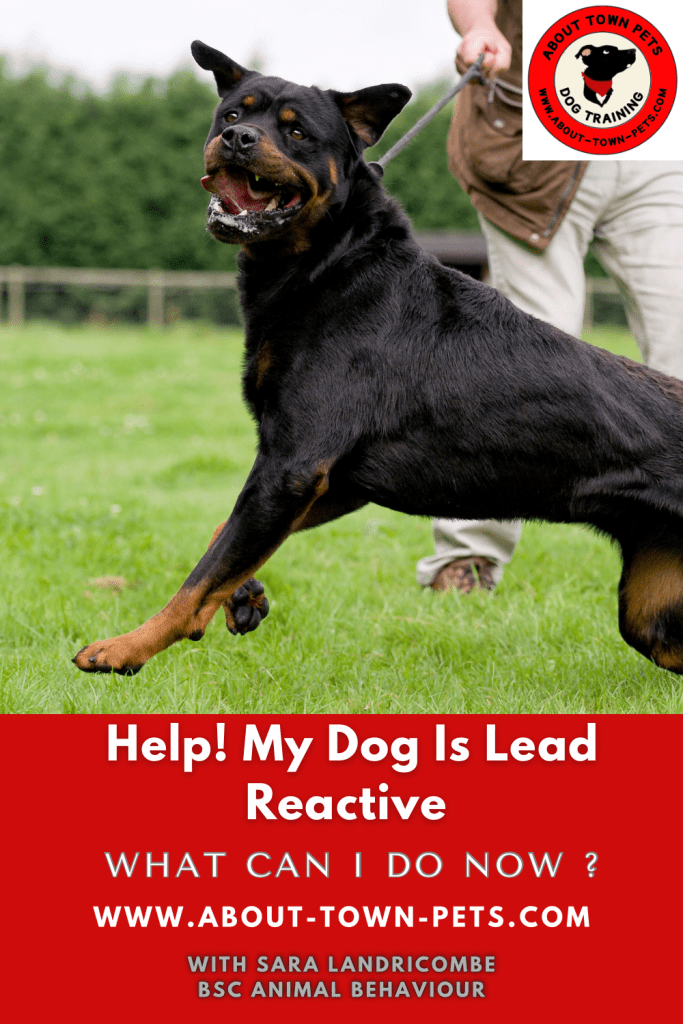
Start to recognise dog body language and once you see it you won’t be able to unsee it again. Dogs do a lot of things before a growl or a lunge and a snap or a bite but are we really looking ? If your dog misses a few of these steps and goes straight to “explosive reactions” or constant reactions like constant barking for example then it’s likely the previous steps haven’t worked for them in the past so they now have a “default reaction” or habit, that looks like – see something I don’t want to be near me – get in there first with an explosive reaction – resulting in something moving away equals awesome it worked I’ll do that again next time👍 It can be tempting to then start to not react to the dog and ignore the behaviour and allow the dog to keep going until they stop but this can lead to further frustration sometimes with more and more explosive responses before “extinction “ takes place so our best bet is to make the dog more comfortable at a distance with someone who has take the time and effort to build up a secure relationship with the dog and work on changing their feelings and association with previously response inducing thing. There is also lots of hormone and neurotransmitter things going on behind the scenes here and a skilled behaviourist will know this about your dog but that’s for another day😅
What to look for – stiff forward “stuck” body language where there back feet stay planted but they move forward with their front paws – ears back – whale eyes (seeing the whites of their eyes) hackles up – lip licking – turning their head to the side to diffuse tension – odd displacement behaviours out of context eg: scratching or yawning – whacking off after an altercation – seeing something and going to wee on something nearby straight away – grabbing the lead – scanning and being hyper vigilant – if these things are happening – move your dog away to a safer distance and simply let them observe – reward dogs then checking with you and generally being attentive and focusing on you instead .
If your dogs reactions are quite severe and they have been reacting for a long time – please consider reducing walks in areas where they are likely to encounter the thing they are reactive to just so we can start to reduce the amount of time your dog spends “rehearsing” the behaviour – do this by planning your walks more appropriately.
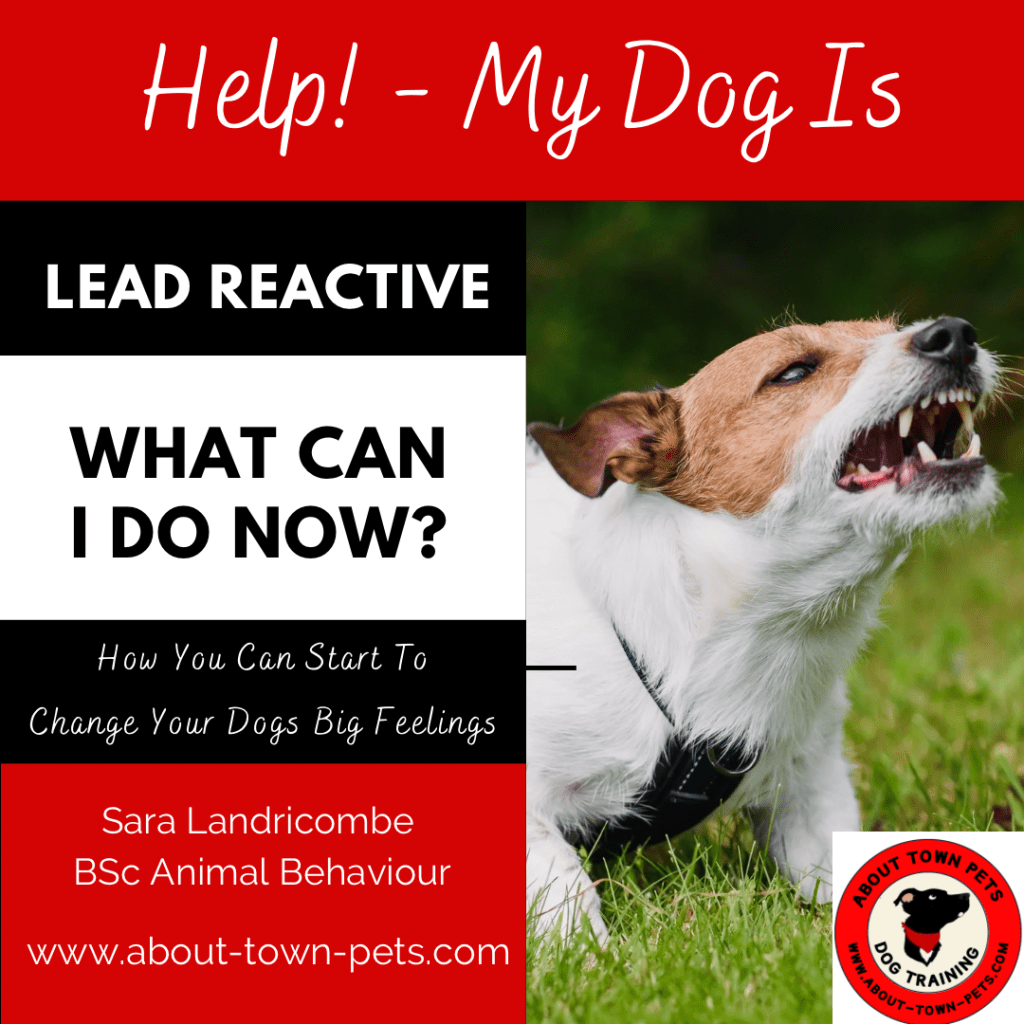
– Do you really have to take your dogs to the shops? Could they go out again later when it’s quieter or earlier in the morning when less people are around ? Could you plan a couple of sessions in a secure field so your dog feels better and can be off lead letting off steam? Can we learn to manage our walks with turn arounds, crossing the street and using objects in the environment as a barrier to keep our dogs calmer whilst they begin to learn an alternative ? There are LOTS of techniques we can utilise and practice BEFORE a dog reacts.
Also worth noting is that it can be tempting to not want to walk your dog because it has become overwhelming or it is “embarrassing” to walk them when they are reactive- I would argue that reactive dogs cannot improve if we do not have a controlled plan in place – they need to work up to learning how to behave in public and they need gradual exposure to the things that they react to otherwise they will become out of practice and antisocial and then we cant blame them if their behaviour escalates due to under exposure. Caveat – this does not mean flooding the dog and hoping he gets over it ❌
Lot of things to think about – don’t worry about being judged – get help sooner rather than later – it has always baffles me that people only ask for help when the problem has become unmanageable instead of being proactive and preventative but is just be really happy if you simply started to get appropriate help and support now. Start as you mean to go on and no dog is too old to train to be more resilient so let’s get started 👍
…… love from your friendly neighbourhood dog trainer Sara ❤️
Ps if you enjoyed this post you might like my previous post on Behind The Scenes As A Dog Trainer & Behaviourist
If you would like to work with me please Contact Me Here Let’s Train Together


 About Town Pets
Published by