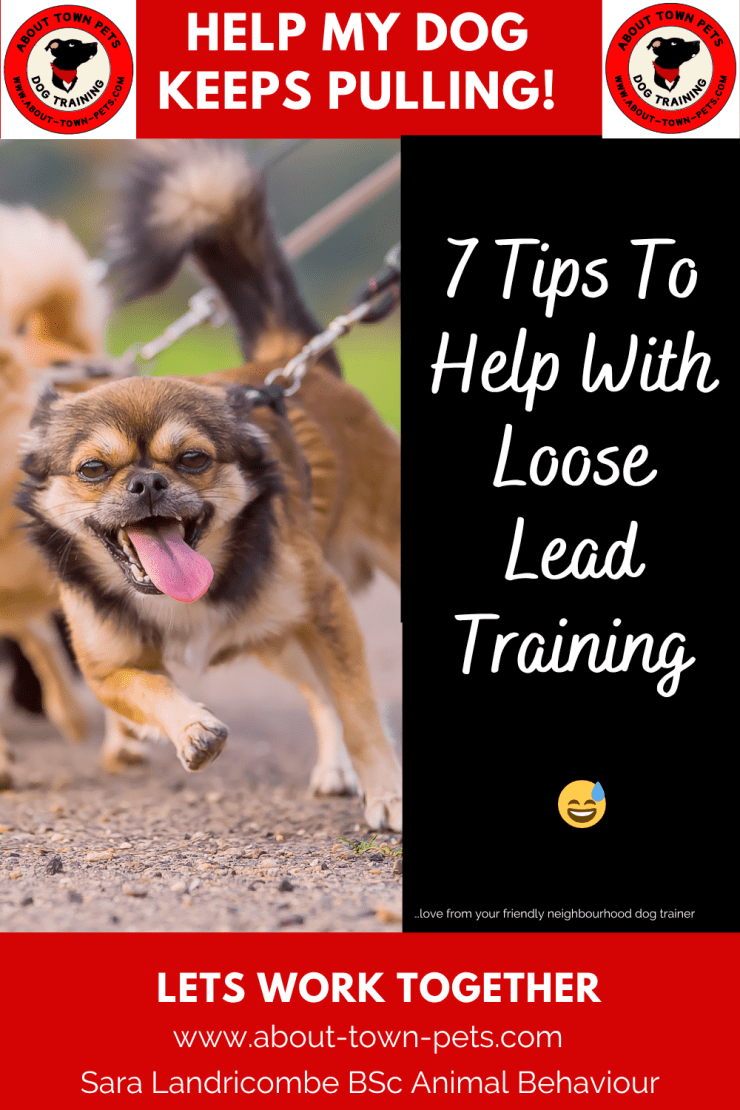
7 Simple Tips to Get Started with Loose Lead Training
Pulling on the lead is one of the most common frustrations I hear about — and honestly, I get it. No one wants to feel like they’re being dragged down the road by a furry sled team! The good news? Loose lead walking is totally achievable with a few smart tweaks and some patience. Here are seven tips to help you get started.
1️⃣ Rethink Your Walk (and Download My Anatomy of a Walk Graphic)
Before you even clip the lead on, think about how your walks are structured. You can grab my free “Anatomy of a Walk” graphic by signing up for my weekly What’s Up Wednesday Newsletter 👉Newsletter Sign Up Here.
Some dogs focus best after a little movement or a breed-specific activity. Ten to fifteen minutes of sniffing, moving, or playing before training can make a huge difference — especially for dogs with the attention span of a gnat 😅.
I often let dogs have one “free” lap to get out that initial excitement (and take care of business) before we start training. Then we move through:
- A few easy wins to get momentum going,
- A new or more challenging exercise,
- And finally something calm like scatter feeding or a snuffle mat to signal the end of the “work” portion.
You can even practice your loose lead walking on the way back to the car, when your dog’s energy levels are lower — then gradually park a little further away each time.
2️⃣ Practice at Home First
Before you hit the pavement, start in a quiet, distraction-free space. Practice the mechanics of luring, shaping, and capturing the behaviours you want. This helps both you and your dog build muscle memory so it feels natural once you’re outside.
Think of it as rehearsing before opening night — the fewer surprises, the better your performance.

3️⃣ Work on Your Lead Handling Skills
Loose lead walking is a bit of an art form. It’s not just about the dog — it’s about your timing, lure placement, and lead handling. You’re juggling food, movement, maybe even a clicker… it’s a lot!
Go slow and break it down: practice luring first, then add the lead, then add walking in a straight line. Most loose lead failures happen because we rush stages or because owners give up before new habits stick. Be patient with yourself and your dog — this takes practice.
4️⃣ Jackpot Training: Make the “Right Spot” Rewarding
Instead of relying on the stop-start method (which can be pretty unclear for dogs), create a jackpot zone right by your thigh — that’s the “first position” you want your dog to aim for.
Every time your dog lands in that sweet spot, reward generously. Lots of treats, praise, or quick repetitions. This builds value in the behaviour you want rather than just punishing the pulling.
5️⃣ Adapt for You and Your Dog
Not every dog — or human — learns the same way.
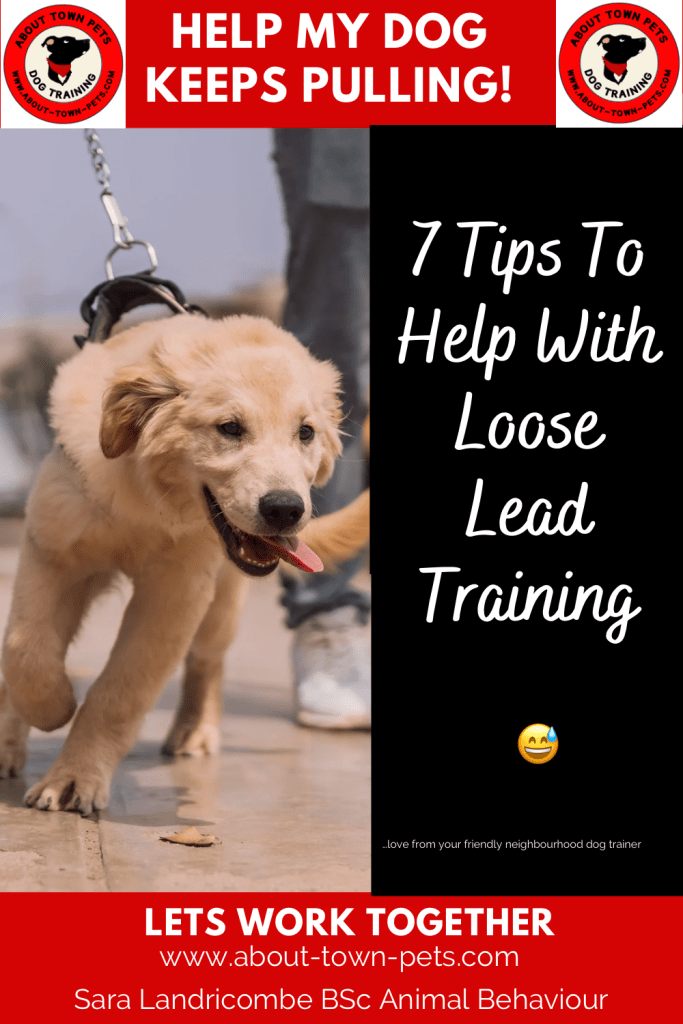
- Got a small dog? Try using a spatula or target stick so you’re not bending over.
- Disabled or mobility-limited? Focus on slower starts, shorter bursts, and consistent pacing.
- High-energy or busy dog? Use lots of mini-sessions throughout the day instead of one long session.
Realistic expectations make all the difference between steady progress and frustration — for both ends of the lead!
6️⃣ Fade Out the Food (But Not Too Fast!)
We want to move away from constant food luring, but don’t ditch it before your dog really understands the job. Gradually ask for more — maybe five or ten steps — before rewarding.
For experienced dogs, you can start mixing in hand touches or verbal praise between treat rewards. Young or busy dogs will need more frequent feedback to stay motivated.
Remember: the goal is clarity, not stinginess.
7️⃣ Keep It Fun and Consistent
Loose lead walking isn’t learned in a day — it’s built through hundreds of little, positive moments. Keep sessions short, upbeat, and always finish on a win.
If you liked this post, check out my High-Energy Dog Training Series — a three-part guide to shorter, smarter training sessions (you can find parts one, two, and three Part 1, Part 2, and Part 3).
💻 Want to Learn More?
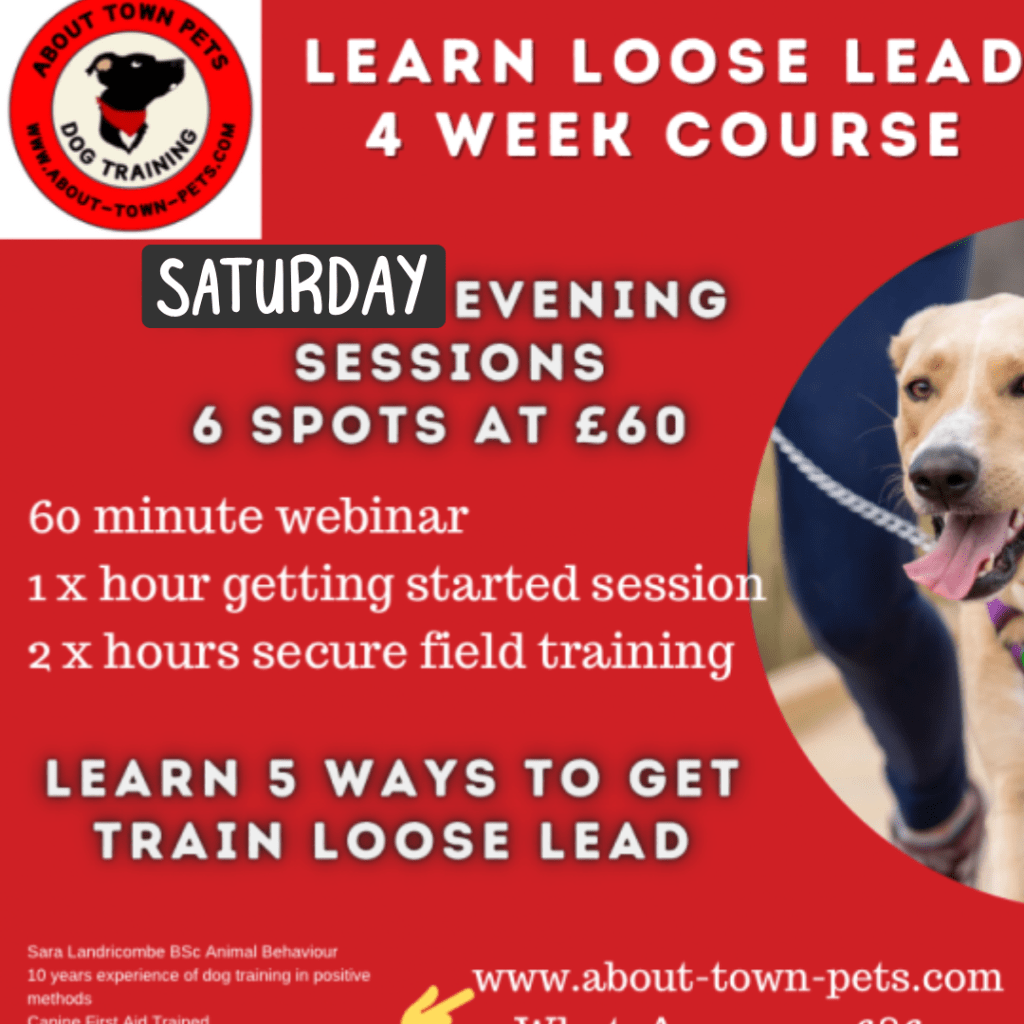
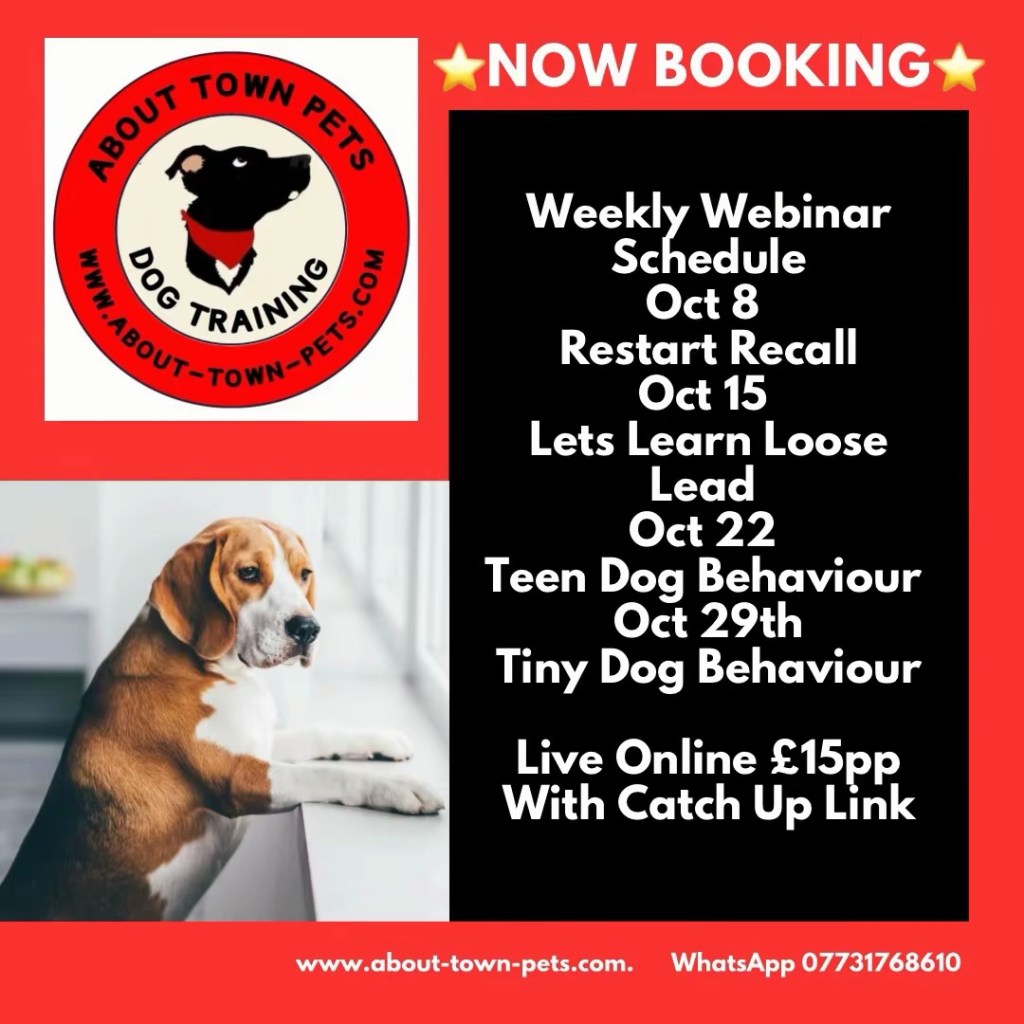
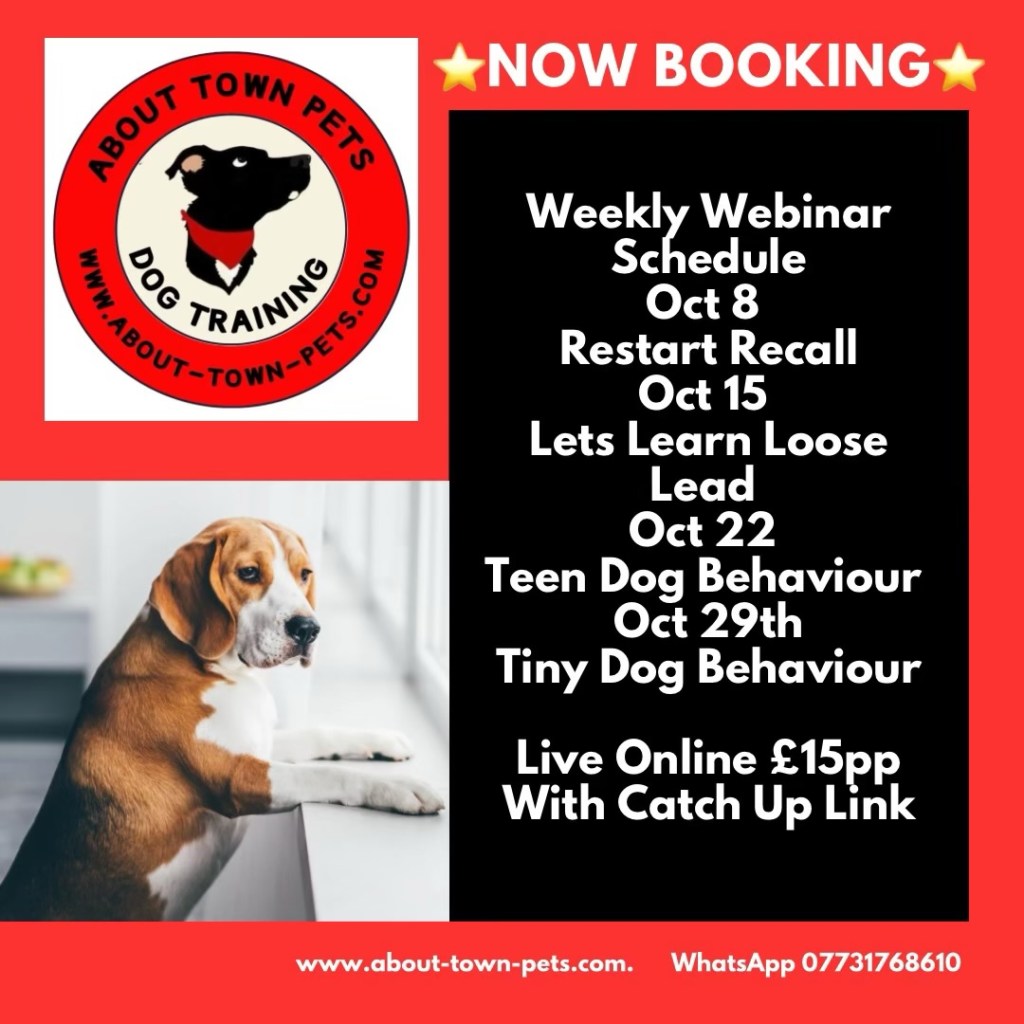
I regularly run Let’s Learn Loose Lead webinars online — Book a weekly webinar here — and also offer 4-week in-person loose lead courses in Plymouth Book lets learn loose lead in person here
If you need extra support, I offer 1-2-1 training and behaviour sessions both locally and online — specialising in separation anxiety and lead reactivity.
🐾 Love from your friendly neighbourhood trainer,
Sara



























 About Town Pets