How Long Is Too Long? Understanding Your Dogโ€™s Alone Time Needs

A Dog Ownerโ€™s Guide to Balancing Alone Time and Welfare

Letโ€™s talk about something weโ€™ve all probably mused over at one time or another as a dog guardian: how long can you really leave your dog home alone?

Technically, the Animal Welfare Act 2006 suggests that after 4 hours assuming that your dog has also just partaken in some form of enforced crating (think overnight in a crate for an average of 8 hours), it would be time to consider your dogโ€™s welfare. Dogs are social creatures, after all, and leaving them for long stretches without interaction isnโ€™t ideal.

In fact, the PDSA is pushing for an additional welfare guideline to consider dogs’ rights to companionship beyond that 4-hour mark. The science is simple: dogs thrive on interaction, and too much alone time can lead to boredom, anxiety, and even stress-related behaviors.

But how long is too long?

A tan faced beagle is lying down on a grey couch

Context Is Key: A Quick Reality Check

For a little perspective, animals in transit on their way to slaughter (yes, grim but relevant) canโ€™t travel for more than 8 hours without a break for food, water, and in some cases, a quick hose down. So if even livestock in transit get regulated breaks, it makes sense to extend similar consideration to our household pets too doesnโ€™t it?

While some dogsโ€”like seniors, puppies, or those with medical conditionsโ€”may need more tailored routines, the general rule of thumb is to limit alone time to 4-6 hours, with 8 hours being the absolute maximum in most cases.


What Can You Do?

Hereโ€™s where your creativity and resourcefulness come into play. Itโ€™s all about breaking up your dogโ€™s day:

  • Enlist Help: Think family, neighbours, friends, or even a professional dog walker.
  • Pop-In Visits: A quick visit to let them out, give them some love, and maybe toss a frisbee can make all the difference.
  • Gradual Training: If your dog isnโ€™t used to being alone, work up to it gradually with the help of a specialist dog trainer/ behaviourist.

Gradual Alone-Time Training: Step-by-Step

If youโ€™re planning on leaving your dog alone while youโ€™re at work, itโ€™s worth setting them up for success:

  1. Start Small: Begin with short periods out of the house, like 2 hours or even less if your dog has ZERO practice (thirty seconds is all Iโ€™m asking to begin with).
  2. Use a Camera: Set up a pet cam and see what your dog does when youโ€™re gone. (Spoiler: the camera doesnโ€™t lie.)
  3. Extend Slowly: Once your dog is comfortable, try 3 hours, then 4. Adjust based on what you observe. Even 1 minute / 2 minutes in micro bursts might be where you start.

Itโ€™s worth noting that adjusting to a new routine can take timeโ€”sometimes up to 6 weeks. So please be patient!

A shirt faces pug lies down in front of a glass door looking out

Setting Your Dog Up for Success

Hereโ€™s a handy checklist to help your dog settle into their alone time:

  1. Get Them Moving: Make sure your dog gets a good walk before you leave, but avoid high-energy activities like frisbee or fetch, which can leave them tired but overstimulated.
    • Instead, try scent-based activities like scatter feeding or search games to help them decompress on the way home.
  2. Feed Them: A well-fed dog is much more likely to nap afterwards. I often do this AFTER their walk due to issues regarding bloat (I have two deep chested dogs).
  3. Provide a Cozy Space: Create a comfortable โ€œhotel spotโ€ where they can snooze undisturbed whilst you are out. The more appealing and luxury the better.
  4. Offer Enrichment: Puzzle toys, Kongs, or chew toys can keep them entertainedโ€”but introduce these while youโ€™re still home so they donโ€™t associate them with you leaving. Give yourself plenty of time to leave. I use the rule that enrichment for the day goes down 30 minutes before I leave.
  5. Keep the Goodbye Drama-Free: No long farewells. Just calmly set them up and go. By planning these morning routines well we can set our dogs up well.
  6. Lastly – make sure you are actually out of sight and out of their scent range because dogs will settle sooner if they can smell you upstairs or out on the doorstep for example. We need to make it as true to life as possible.

A large Black and Tan shepherd mix breed lies down on the decking with his mouth open whilst wearing a black harness on
The Bottom Line

Your dog doesnโ€™t need 24/7 supervision, but they do deserve thoughtful planning to ensure their welfare. With a mix of routine, training, and enrichment, you can strike a balance that keeps your dog happy and healthyโ€”while giving you peace of mind.

So, whether itโ€™s calling on a neighbour, investing in a pet camera, or adjusting your dogโ€™s routine, small changes can make a big difference and remeber itโ€™s never too late to start home alone training.

Love from your friendly neighbourhood dog trainer Sara.

If you enjoyed this post feel free to check out my previous Home Alone Posts Here ๐Ÿ‘‰ How to start home alone training & Five myths about separation anxiety

If you want to work with me then you can email me here Contact Sara at About Town Pets as I now offer online 1-2-1 dog training in person in an 8 miles radius of Plymouth Uk or online for the rest of the UK USA Canada Europe New Zealand and Australia specialising in the following topics;

Separation Related Distress

Lead Reactivity

Adolescent Dogs (6-18 months old)

Tiny Dog Behaviour (dogs under 7kgs)

City Dogs (adapting training for urban environments)

Or BOOK NOW ๐Ÿ‘‰Home Alone Heroes Package

Please be sure to check out my Facebook page for upcoming webinar topics coming soon About Town Pets On Facebook

Tap on the image above to book now

How To Train An Alternative To Lungeing Forward

Common in herders and hunters

I recently replied to an enquiry looking at how to train a twelve month old Australian Shepherd who was nervous in general around novel stimulus , who lives in a farm environment (riding stable) and didnโ€™t have much experience of the wider world except for trips to the beach occasionally. He lunges forward when asked to meet and greet new people and also circles and barks when anyone tries to leave the premises or the group if they are out walking when off the lead.

Sound familiar ? It should be , itโ€™s a common trait in sheep herding breeds and may also look quite similar (but is not the same thing) in flock guardians and hunting breeds (sighthounds and gundogs like spaniels for example) whilst each dog is an individual and some parts of my advice would be tailored depending on the age sex breed and learned history of an individual – here is my response for a young inexperienced shy/nervous collie. But the techniques and โ€œfoundation trainingโ€ would be very similair for dogs exhibiting these sorts of behaviour. Also if your dog is over 2-3 years old you can gloss over the first section and go straight to the second paragraph. You may recognise some of the things I mention if you think back to when your dog was 12-18 months old. If you find yourself nodding your head and saying โ€œah yes Fido did used to do that a lot when he was X months oldโ€ then Iโ€™m here to tell you why that happens in the next paragraph. Still nodding? Maybe take a quick look at my previous post Help my teenage dog has forgotten everything ๐Ÿ‘ˆ

Letโ€™s get into it.

Firstly welcome to adolescence. Twelve months old is roughly around the time a secondary fear period can kick in coupled with a few other things you have the perfect storm. Take the fact that your pup is also quite an anxious dog by nature then you can see how any previous behaviours such as some form of overarousal around novelty (new people, new places ,too much going on at once) can make those โ€œreactionsโ€ more amplified. It is important that any training during this period is done gently and at a level the dog can cope with. Distance is your friend. Start any training at a distance that he can cope with and work back up to meeting and greeting people and also watching or participating at the edge of classes.

Now you mention his ability to cope for an hour or two -thatโ€™s amazing for a teenage dog. I agree that these are traits shepherding dogs do naturally and without ample opportunity to meet his needs in regards to his pastoral behaviours then when he gets super frustrated tired excited or fearful he will resort back to behaviours he has been selectively bred for (micromanaging his environment or space seeking behaviours if he is very nervous) looking for the body language that his behaviour has tipped over the edge of his ability to cope is your first port of call, training for this scenario is done separately. This is where we start to build the scaffolding or foundations for any future behaviours we may need to chain together in the not so distant future.

Laying The Foundations First

I would put the โ€œeye stalkโ€ part of his behaviour on cue โ€œlookโ€ mark and reward for eventually disengaging an actively reward for an alternative which is looking back at the handler and moving away.

The key is to mark and reward AFTER heโ€™s disengaged. Obviously do this in a calmer environment to get the initial behaviour. With enough repetitions you will get a dog that fulfils the โ€œeye stalkโ€ part of the behaviour without the chase and grab part of the behaviour. You could also fulfil that bit of the behaviour too. Once you have a reliable return from the eye stalk what will the next behaviour be? This is dependent on what suits your dog I often teach a very simple nose touch to hand for nervous dogs as a little confidence booster or if we also wanted to fulfil the chase grab bite sensibly, when he returns perhaps wanting a โ€œkryptoniteโ€ toy throw it past yourself so he has to chase the toy on returning to you this would also get him engaged in an alternative to going forward. Then we could add the last behaviour to the chain and play tug โ€œgrab bite partโ€ this is how agility is trained for example the reward is at the end ususally an amazing fluffy tug toy of some description. And remember to let the dog actually win the toy and keep it.

Make sure this is done on lead to begin with to prevent unwanted rehearsal lungeing forward to start with. Keeping the lead relaxed (this is why distance is crucial to begin) So your behaviour chain looks like this (at a distance) Eye Stalk something in the environment anything moving- cue โ€œLookโ€- wait for it (.you may need to find something that helps get his attention in the first few instances / squeaker his name / anything trained so it has become a reflex) Mark โ€œYesโ€ for disengagement back to you – then throw the toy past you as you move away from the dog – dog orientates towards you- gets quicker or chases you- throw it slightly behind you (add distance to this throw as he gets the hang of it) play tug or allow him to play with the toy – ask for a drop or not – train this seperately/ repeat (at each stage proof the behaviour – so that generalising can take place).

But My Dog Doesnโ€™t Take Food Or Toys When We Are Outside

If the dog isnโ€™t taking food or toys rewards when they normally would in a calmer environment itโ€™s a good indicator that your environment is too over stimulating or stressful – go back a step and further proof the step before moving on / your ability to time your marker cue when he disengages is key – quicker timing faster learning less repetitions needed๐Ÿ˜…

Does Your Dog Really Need To Say Hi To Everyone?

Iโ€™d argue not really, now that we know it could be adding to your dogs โ€œbusvket of stressโ€ , too many unmanaged interactions in this way may result in a dog having to resort to the behaviour weโ€™ve previously looked at as a result of too many triggering things happening in succession. So Iโ€™d give meeting and greeting a break for a month and just do this stuff mentioned instead after all the training and confidence boosting you could do the same when people approach because l can almost guarantee your dog doesnโ€™t want to meet and greet when heโ€™s shy about new people instead work of focus on the handler whilst people throw rewards away from themselves (giving treats from their hands can cause conflict in the dog so best avoided – think I really want that treat but I really donโ€™t want to go near that person usually results in hand grabbing and increased arousal- so best voided) get visitors to calmly throw any reward past the dog so that he moves away from them instead of towards / a much safer option would be to do some antisocial training and by this I simply mean reward everything that looks like focusing on the handler in the presence of new people- not every dog is a social butterfly sometimes the best we can ask for is tolerance but we donโ€™t get tolerance if we constantly force the dog to do stuff they are not yet equipped to deal with.

Things To Add To Your Foundation Work

Once You Have A Reliable Reinforcement History

I would also then be teaching your dog directions with a solid down (as he seems to be very good at this ie has a reliable reinforcement history) Utilise what your dog already knows well, this will save you a lot of time. Letโ€™s say he can still eye stalk well , always returning to the handler for disengaging. I would now start to this progress this behaviour off lead. Eventually with enough repetitions you will get a dog that looks at his triggers and starts to reflexively return to you for โ€œthe grab game or a treat toss behind youโ€ reward delivery is key to getting engagement up. And donโ€™t be in a hurry – we are trying to build a new association for the one previously learned which takes time and patience ๐Ÿ‘

For further guidance on how to train the foundations in this behaviour change take a look at Predation Substitute Training by Simone Mueller who has a wonderful book on Amazon on the subject- Whilst you are there also check out a book called Control Unleashed by Leslie McDevitt And for the engage disengage section look up Grisha Stewarts many free resources on Grisha Stewartโ€™s Behavioural Adjustment Training she too has a very useful book on lead handling and creating behaviour change. I like to use a mixture of all of these techniques).

How To Train High Energy Dogs

Part Three

In the previous blog posts in this series we looked at two ways in which we can set up our adolescent or high energy breeds of dog for success in regards to trying to train them and getting them to a point in which they might actually be able to concentrate on the task you are trying to set them. We looked at PRE-TRAINING Here, whereby we give those dogs something to do BEFORE we even leave the house and also look at implementing a structured walk Here , depending on the dogs personality and temperament type.

Next up Iโ€™m going to give you some little insider tips as to WHERE and HOW I implement all of the things I have mentioned in my previous blog posts. Thereโ€™s even a bonus tip for all of those who have read all the way to the end of this post.

So here are some of my insider tips;

Insider tip #1

Change it up- your dog gets super excited by leaving through a specific door? Or has your walk become a bit of sprint to get to the nearest green space so we can play (insert your dogs favourite game here)? If yes then change it up. Start to exit your house from a different exit, where possible or change the route to the park, better yet- occasionally donโ€™t even go to the park just so a โ€œsniffyโ€ walk. If your PRE-TRAINING phase was good enough you might be able to encourage your to go for a longer more varied route today that doesnโ€™t end in a game at the park. What we are trying to achieve with this is to get your dog to โ€œUNLEARNโ€ what his walk โ€œalwaysโ€ looks like. If he ALWAYS go to the park at the same time every day and itโ€™s this โ€œrushโ€ that you are trying to prevent with loose lead training, then going the same route isnโ€™t going to help your dog to concentrate in the beginning phase when we are training a new behaviour. This is where the next tip might help you.

Insider tip #2

If in doubt , drive- if the thought of being pulled down the road for fifteen minutes does not appeal to you perhaps we need to make the conscious decision to drive somewhere quite and free from distractions. This is what is meant your dog trainer asks you to start training somewhere with low distractions once youโ€™ve graduated from training in the back garden or in the house. Now itโ€™s your turn to find open spaces, private enclosed fields or โ€œsecret spotsโ€ where you can train with less distractions from dogs or people coming up to you and unravelling that days work. I encourage owners who are โ€œloose leadโ€ training to drive to a quite open area to play a game with your dog or go for a walk on a long line and then train on the way back. Making sure to park a bit further away each time, allowing your dog to concentrate on loose lead a bit more each day. I also encourage owners with reactive dogs to go somewhere that looks like โ€œreal lifeโ€ but isnโ€™t. Which leads to my next tip.

Insider tip #3

Real Life Mock Ups – three places I like to train dogs that looks like real life but isnโ€™t as busy. Here are three to start you off.

Enclosed fields are a godsend, but they are not all created equal, especially if you have a reactive dog. Choose one that has a gap between fields so that the dogs can perhaps see each other from afar but canโ€™t actually get to each other, because nothing ruins recall practice like three dogs running up and down the fence line over threshold for forty five minutes.

Cemeteries are an under-utilised little gem that I like to use because more often than not , they require all dogs to be on lead at all times. Itโ€™s a great place to practice your lead handling skills, to practice โ€œlook/look awayโ€ for reactive dogs and provides ample opportunities to use โ€œstreet furnitureโ€ as it were, to your advantage. Getting to close to an oncoming dog? Dart behind a row of tombstones. Need to practice coming up to a junction, use a headstone as a buffer. Want practice loose lead somewhere other than your street , the local cemetery is a great alternative. I know it sounds mad but they are usually quite and often with other likeminded people with dogs in training. Make sure to take your โ€œin trainingโ€ cuff or waistcoat with you so people donโ€™t think your absolutely going crazy. My local cemetery had a wonderful caretaker who loved seeing me train dogs as long as we respected funeral days and picked up after ourselves obviously๐Ÿ‘

Industrial Estates are also your friend , they are usually quieter or even empty on the weekends and are great places to practice with stooge dogs (calm well socialised dogs, that you know personally) from a distance walking up and down as if on a โ€œreal lifeโ€ with the added bonus of having less people traffic and dogs in these areas as well as nice open car parks for nervous dogs to practice meeting and greeting dogs on long lines that are very well managed/handled. I also like to use them to parallel walks with calm and reactive dogs across the street from each other.

So there you have it how to train high energy dogs in three parts.By taking the pressure off yourself and realising that is actually better for all involved. Here is a recap of what I would do if I was trying struggle to get my crazy springer spaniel to practice some loose lead or even work on building up a nervous dogs positive associations with previous triggers.

Pre-train before you leave

Prepare for your walk by changing your exits and possibly changing the routes you take to make them less predictable for excitable or frustrated dogs.

Make walks more predictable for nervous dogs, however.

Choose an appropriate venue to allow your dog to succeed.

Incorporate some structure into the walk with engaging activities followed by calming activities, to prevent overstimulation.

Train on the way back to the car or on the way home.

Continue to find venues that can help your dogs to practice with minimal distractions or where you can build back up to โ€œreal lifeโ€ busier scenarios over time.

Hopefully this has helped you to see what is required and in what order to help you to train you busy, high energy dog. Keep scrolling to read my BONUS TIP below that I think itโ€™s really important you know when dealing with busy working breeds.

If you enjoyed this post please check out my previous posts in the three part blog series on Training High Energy Dogs here. Or you can sign up with your email HERE COMING SOON – – to grab a copy of 101 enrichment ideas for your dog via email. Before you go check out the Bonus Tips Below๐Ÿ‘‡๐Ÿ‘‡

Bonus Tips – For Training High Energy Dogs

Before you go Iโ€™d like to share with you this bonus tip.

Practice three things if you own a high energy dog

Sloppy handling timing and general mechanics of how you distribute rewards to your dog can have a big effect on how quickly or how clearly your dog learns your new skills. So if you get the chance , get a professional in to look at all of those things before embarking on your training with your dog, this is because high energy dogs can also become easily frustrated and often have short attention spans , these are both things that can hinder our success and are not the dogs fault, even though it might look that way. So before you start to think your dog is stubborn or being grumpy please practice these three things-

Lead Handling Skills – more space is better for our busy dogs so being able to literally pick up the slack in a timely and confident manner will help you to manage your dog quickly, knowing how to stop your dog gradually, how to prevent your lead from getting tangled and knowing where the end of the lead is (no extendable leads for the love of god people).

Timing – learning to capture the correct behaviour with a word like โ€œyesโ€ or โ€œgoodโ€ followed by the reward is important because we often miss lots of good attempts because we leave it too long to mark and reward. Get good at looking for the behaviour you want and get in the habit of saying โ€œyesโ€ followed by the next step.

Delivery – otherwise known as your mechanics. How might your body language be affecting what your dog is doing? Are we sloppy with the lead? Do we get tangled up so miss the point at which we could have marked and rewarded some amazing loose lead? Itโ€™s muscle memory. We can only get good at this bit with practice. We will get what we put in. Practice luring your dog into position, practice holding a treat under your thumb so we can get the dog into the right position before marking โ€œyesโ€ and releasing the treat into their mouth. Or do we have a hand grabber? if so get good at rolling treats directly in their eye line so they donโ€™t spend to long โ€œsearchingโ€ for their reward. As you get quicker at all of these things so too will your dog get quicker at picking up what you actually want ๐Ÿ‘

Hope all of this helped. Love from your friendly neighbourhood dog trainer, Sara.x

Ps if you would like to work with me in person or online please feel free to contact me here Contact Sara Here

Training High Energy Dogs – Part Two

Part Two – The Structured Walk

Do you have a dog that is manic for the first 5-10 minutes of your? Dog they pull you down the street? If yes then, make sure you pop over and read PART ONE in this series to see how โ€œPre-walkโ€ training and games can help you before you even leave the house hereHow To Train High Energy Dogs Part 1 – Now letโ€™s look at two types of structured walk you can do after you have set aside fifteen minutes to do something e,she with your dog (see previous post).

The Structured Walk Number One

Letโ€™s remember why we are walking the dog, first and foremost, I would hope everyone would agree, itโ€™s for the dogs benefit. Itโ€™s your dogs walk and yours second. If we keep that at the front of minds we can then also remember that what we might want to do in that walk might not actually be what that dog wants to do on that walk.

What is a structured walk I hear you cry? Itโ€™s a very distinct set of things we are actively trying to encourage at specific times of the walk for a very specific reason. Itโ€™s not very complicated I promise. It will however require a little bit of pre-empting on your part, thatโ€™s all.

There are five questions I want you ask yourself before we start;

1- What type of personality does my dog have (boisterous, confident, shy, nervous, under confident)?

2-Whatโ€™s does my dog love to do (digging, sniffing, movement, praise)?

3-What training do they already know?

4- What can we be working on to ,are this more enjoyable for us both (does my dog know- โ€œYesโ€, โ€œDropโ€, โ€œThis Wayโ€ โ€œLookโ€)?

5- What venue can we walk in to achieve our structured walk today (do I need the car?, is there a quiet open field I can use? Will an extended walk in my local area suffice?).

Thatโ€™s it five things to consider and I will come back to the last point in a minute.

Id your dog number ONE who might really really enjoy sniffing , they get in โ€œtroubleโ€ for constantly

Why these five things?

Firstly knowing our dogs personality type and their likes and dislikes means we can start to see the walk from their perspective. You might think that โ€œaround the blockโ€ walks are boring to you but to your dog who might be shy it could be a way of getting and using their nose in a familiar environment one in which youโ€™ve practiced how we move away from anything that is scary or perhaps we have done a lot of look/look away training on this route so they no longer have to be super vigilant, as an example. On their hand overly confident dogs who need to learn to be calmer might benefit from โ€œsetupโ€ walks in real life places but with very little distractions. They might not be ready for the dog park just yet but perhaps they can cope if they look at the dog park from far away.

Itโ€™s important to know what your specific dog likes to do because we can use that to our advantage to make their walks more interested h and also can help get more engagement when we are out and about trying to train. For example if my dog is a superstar sniffer I would incorporate almost the entire walk to Scent-work so that I could wean them off of high energy activities all together or my crazy spaniel might not get a lot from walking around the block on a lead but might excel of search and find activities in a small pocket of woodlands that may require very little โ€œwalking to the venueโ€. I could let myself off the hook for the dreaded lead walk for this dog and begin training AFTER they let off steam in the woods.

Utilise what they already know. Does my dog know a sold โ€œdropโ€, brilliant letโ€™s play some retrieve games in the woods (proper search and find games). My dog reliably knows โ€œhand touchโ€ awesome, letโ€™s ask him to do that as part of his loose lead training so we can reduce the amount of treats we give him or lastly my dog knows โ€œfind itโ€, brilliant letโ€™s play โ€œFind itโ€ on the way home – work with what youโ€™ve got and add skills in.

Which leads me to – what can we add to make this more enjoyable. Thereโ€™s a lot to be said for basic life skills with your dog, my top ten go to cues I use every single day in multiple groups of dogs are โ€œyesโ€ as a marker word, โ€œThis Wayโ€, โ€œLookโ€ โ€œWalk Onโ€ โ€œWaitโ€ โ€œHereโ€ (for loose lead) โ€œWhatโ€™s Thisโ€ โ€œDropโ€ โ€œComeโ€ & โ€œFind Itโ€. If your dog doesnโ€™t know any of these , get working on them very soon. **

** I would also say number one thing is to learn to handle a lead better and work on your ability to give rewards precisely and in a timely fashion, without getting tangled**

Lastly we need to set our dogs and ourselves up for success. If our dogs find the front door duper exciting try to desensitise it or change the exit you are using. If we have a nervous dog donโ€™t force them to go on busy loud street walks without building up to it and also donโ€™t take reactive dogs to a place that they might see a plethora of people or dogs in high frequency. Also find quieter places for over excited teenage dogs so they can learn to stay calm and donโ€™t expect them to make go decisions in that last five feet or so between meeting new dogs and new people. If in doubt create space by moving on. Be vigilant, look for you exits and entrances , look for street furniture you can use to calm your down down behind whilst people walk past and start thinking about your walks from your dogs perspective and not your own. Sure itโ€™s convenient to go to the nearest green space and throw a ball a hundred times to create a tired dog. I would then say have they been physically and mentally challenged but the time you spent with them? If not then some simple mindful things can be added to get a dog that loves their walks with you and that you enjoy more as a result.

Structured Walk Number Two

We should also remember that with a structured walk we are getting rid of the โ€œstressโ€ having to take our dogs on a super exciting adventure or rushing the walk just to get it out of the way for forty five minutes instead letโ€™s say that forty five minute looked like this-

PRE-TRAINING (15 minutes) – GO SOMEWHERE QUIETER – FOR OUR WALK OR EVEN AROUND THE BLOCK SNIFFY WALK (15 minutes)- TRAIN ON THE WAY BACK TO THE CAR OR FIND IT ACTIVITIES ON THE WAY BACK (15 minutes) – HOME TIME.

You can see with this structure not only have we reduced the actual amount of โ€œwalkingโ€ we have had to down to thirty minutes instead but we have actually added more engaging activities.

The pre training has gotten that start of the walk energy out, going somewhere in the car or going somewhere predictable helps keep your dogs arousal levels to a minimum as much as possible and also sets you both up to have a less stressful walk. This part of the walk is the actual excersise part of the walk and can include sniffing to engage a different part of their brain so they can potentially be physically and mental tired to the point that they are more likely to concentrate (even in short bursts) on your training activity to have planned. The training/ Find It part of the walk calms their brain down from the previous high energy activity. Itโ€™s why I donโ€™t encourage constant high energy games such as fetch or a ball flinger, not only does it injure knees and joints galore you are essentially creating a dopamine addict, who, without some sort of structure on his way back from the walk will sometimes go home and still be โ€œwiredโ€ from walk because he hasnโ€™t had chance to come down the other side of his high. I would offer that we do this with a handful of find it games & retrieve games to engage his nose, as calm licking or chewing can help bring those hormones back down below an unsafe threshold. *

*Please not I am not saying you should never through a ball for your dog again, but I am saying donโ€™t spend the whole โ€œwalkโ€ throwing a ball flinger or a frisbee until the dog is flat out tired. I am saying throw it a few handful of times and put it away in favour of a few different activities instead.

So structured walk one is for dogs that are not reactive in any way and are perhaps just a high energy working dog who often can fall into the habit of pulling, lead grabbing or needs lots of stimulation to prevent boredom. These dogs benefit from ; PRETRAINING/A FUN WALK WITH MINIMAL DISTRACTIONS AND LIKELY ONE-TO-ONE ATTENTION from the handler (no getting distracted with these dogs please a as they thrive from quick timing and lead handling skills. These dogs are quick learners and so much you be. THEN TRAINING IS MOTIVATING AND REINFORCING & LASTLY ANY FORM OF SNIFFING OR SCENT-WORK TO HELP THEM CALM DOWN.

Structured walk number two – is for those more nervous dogs that need you go slower or who struggle in new environments. I would like you to structure your walks so that they become SAFE & PREDICTABLE. By all means we want to build up to what these dogs can do and cope with over time but to get them there quicker we want to make them feel that this walk is safe because we do this then this then this. Step by step. Your walk might start with a confidence boost at home in the for, of training or an easy find task for fifteen minutes then if lead walking is scary then simply start with โ€œlook/look awayโ€ sorts of training on your front lawn or in the driveway. We want these dogs to just look at the world around them – they will naturally be hyper vigilant and look at everything in their environment anyway. Let them take it all in. You will likely not get far with these dogs in terms of distance but thatโ€™s ok too. These walks are about building confidence for the dog and your ability to handle them in โ€œscary situationsโ€. Graduate out into the street of to a preferred quite spot where they can sniff and explore at their own pace for fifteen to twenty minutes and then dog some training on the way back if they are feeling up to it. Donโ€™t drag these dogs around allow them to stop if they hear a loud vehicle passing but or a boisterous child on the other side of the road, encourage โ€œLook/Look awayโ€ on their own. They will walk on when they are ready. Actively encourage sniffing on the way home to let off some of their โ€œmental steamโ€. You will find these dogs are mentally exhausted and you could add another game when you get home again when they feel safe to aid in getting them physically tired as well. Ending your time with a nice licki Mat or something similar. These walks look like this,

PRE-TRAINING (15 minutes)/ ENGAGE DISENGAGE WORK NEAR THE HOME AND PREDICTABLE WALK(10-15 minutes)/SNIFFING AND FIND IT ON THE WAY HOME (10-15 minutes) – PLUS AT HOME GAME /LICKI OR SNUFFLE MAT TO FINISH.

As you can see there could be so much more to the way in which you walk your dog. I want everyone to enjoy dog walks again. Instead of hiding your dog away from the world because they are too excitable or too reactive etc etc, letโ€™s start to implement completely doable activities for your specific dog so that you can start to enjoy walks again with your best friend. Dogs are constantly learning so letโ€™s help them to go out in the world again with structure that is on purpose for our high energy dogs that find themselves expected to be โ€œpetsโ€ without having their own needs met first.

If you enjoyed this post please keep on eye out for the third and final part in this series of How To Train High Energy Dogs – next time I will be looking at places or venues we can utilise that will actually help our high energy dogs to work up to more distraction environments in regards to getting and keep their focus whilst on a walk. In the mean time please check out my previous post Pre Training High Energy Dogs here.

Love from your friendly neighbourhood dog trainer Sara. X

Ps if you would like to work with me in person or online please feel free to contact me here Contact Sara Here

Training High Energy Dogs

Part One

High energy dogs come in all shapes and sizes and they range from busy spaniel puppies with no off switch to highly frustrated teenage dogs who just have to chase every thing that moves in their environment.

It can be difficult to know where to start with regards to training them, for specific scenarios, especially if you have a dog that pulls the minute you step foot out of the front door, or a dog who is overtly stimulated by things in their environment when out and about.

I want to offer you part one of โ€œhow to train high energy dogsโ€ of which I call โ€œPRE-TRAININGโ€, imaginative I know right?

Red Duck Tolling Retriever holds a green frisbee in its mouth

All dogs get excited and pull for a variety of reasons during the first 5-10 minutes of any walk. If you are trying to train your dog at this moment you are likely setting both you and your companion up to fail. Now this is where the โ€œPre-trainingโ€ comes in.

The first question before we start pre-training – to ask yourself – Does your dog know how to drop? If the answer is yes then continue on to Pre-training, if not then itโ€™s time to train a reliable โ€œdropโ€ (this is another โ€œHow Toโ€ post for another day).

Once you have this in the bag then you can use this new found skill to create a pre-training protocol, whereby you choose a breed specific game that you can play for about 15 minutes before you need to go out for your walk/ training session. Whatever you dog really enjoys * It could be Scent work and Find It games in the garden for spaniels and hounds. Games of tug with sight hounds terriers and bull breeds or retrieving games for gun dogs. Perhaps your dog is a sucker for a frisbee or more training games like many of the herding breeds.

Be on the look out for over arousal in your dog and always bring them back down from hyper games with licking sniffing or chewing activities.

This extra 15 minutes of activity will help to get rid of that โ€œfizzinessโ€ you experience with them at the beginning of a walk.

*Every dog is different but taking the time to find out what they were bred to do, also what motivates them will serve you well when deciding how to structure this pre-training, perhaps your dog loves movement, scent ,holding something in their mouth, hunting or even working out a task on their own (spaniels and terriers excel at this). I guarantee it will be a joy to simply watch your dog carefully to find these things out.

By doing this you will find that your dog is already engaged with you and more likely to be โ€œin the moodโ€ for training and will be able to either concentrate/focus more on any engagement work you now want to do with your dog (loose lead or engage/disengage) for example.

Doing so will also make the first section of your walk much more bearable even if itโ€™s so that you can get to your dog to an area more suitable for training. It could even be a calmer car journey if you need to get them into the car to go somewhere more suitable to continue your training efforts.

In part two we will look at the two types of structured walks that I recommend that can further set both you and your dog up to succeed in your training efforts especially with regards to high energy dogs. Sometimes we just need to change the context for our dogs and come up with protocols that meet them halfway when we ask so much of them everyday.

Springer spaniel holds onto a tennis ball

Keep an eye out for part 2 of โ€œ How to train high energy dogsโ€ and in the meantime if you would like to work with me donโ€™t hesitate to contact me here About Town Pets

โ€ฆ..love from your friendly neighbourhood dog trainer Sara โค๏ธ

Ps if you enjoyed this post you might like my previous post on Help my dog is lead reactive

Help My Dog Is Lead Reactive

How to start helping your lead reactive dog by changing his emotions

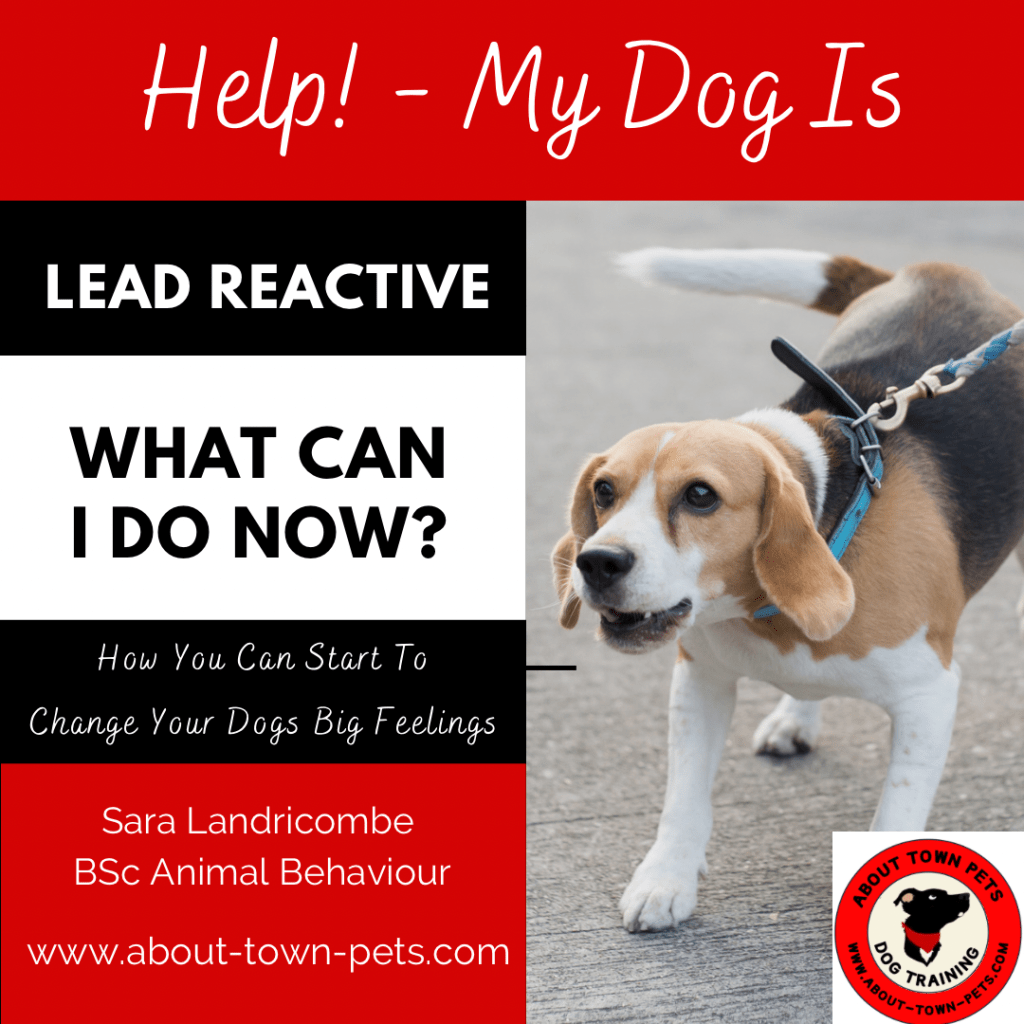
Beagle on a blue lead lunges to the right

You are not alone , this is a very common occurrence nowadays especially as we have to keep our dogs on a lead in order to keep them under control in public places.

If I want you to take three things away from this post today itโ€™s that:

1- Reactive dogs are not bad dogs

2- Reactive dogs are likely having to resort to this form of communication because their more subtle attempts of appeasement or displacement have gone unnoticed

3- There is NOT a one size fits all approach to these behaviours (every dog is different has their own learned history of events / genetic background/ age / sexual status etc) all need to be taken into account

4- There IS however some underlying emotional state that is going unnoticed or being misinterpreted perhaps.

So letโ€™s beginโ€ฆ..

So youโ€™ve filled in a training and behaviour history questionnaire and we have assessed perhaps likely causes and rule outs and the reactions are not so severe that they require medical intervention and you are waiting to start some training with an experienced and ethical dog trainer or behaviourist. Whilst some simple changes to your dogs lifestyle including diet and enrichment might help – controlled training scenarios and possibly behaviour modification is likely whatโ€™s needed at this point.

I am assuming here that you know that letting people or dogs greet your dog for the first time on a taught lead is not ideal and that letting your dogs run up to other dogs in general, but especially ones on leads is actually making their behaviours worse as most do not care for rushed face to face greetings – itโ€™s bad manners if youโ€™re a dog and the reacting dog is sometimes angry about the intrusion into his space.

A white bull breed dog on a green harness looks happy and pulls forward to the left

What well adjusted social dogs actually prefer is a behaviour Iโ€™ve heard being called โ€œArcingโ€ where they approach each other from the side whilst giving each other somewhat of a wide berth (this can be seen when you see two dogs go round and round in circle trying to sniff each others butts) and then when they sniffed a butt they quickly go on their merry way – now if we then add a lead we are preventing that free access to the bottom sniff and walking away (weโ€™ve all seen this in the local park when dogs get tangled –

TIP – if safe to do so drop the lead and once theyโ€™ve finished their little butt sniffing circle quickly pick said lead back up, gather it up and move on- this is one of the copious reasons I do not like flexi/extendable leads- I digress – can you now see how by adding a taught lead to this scenario we would be taking away that dogs ability to choose a quick exit ? This will often lead to frustration in a dog that really wants to go and say Hi or anxiety in dogs that just want to move away – this spills over into a reaction because nobodyโ€™s making this rude obnoxious new comer get out of the way. How can you help your dog with this? I hear you cry -simply ask yourself a series of questionsโ€ฆ..

Is your lead long enough? AND do you know how to handle a 6ft lead appropriately ? I ask you this because the lead creates tension if itโ€™s too short – whilst keeping a dog on a short tight lead might feel to you like you have more control in a given situation (and in an emergency situation definitely do this to get past another dog for example) but it is not however , helping that dog feel like he has a choice or conveying calm in the face of something potentially exciting, frustrating or scary (from your dogs perspective).

Red and white spaniel on a black harness lunges and howls

There is a definite way to handle a longer lead in relaxed manner but also having control of that lead should you need to move your dog forward or away from a scenario. You also should attempt to create enough distance so that your dog isnโ€™t having to get to the point that he feels that he has to lunge and therefore make that lead tight- learning your dogs โ€œsafe zoneโ€ is critical to starting any training . Which leads (no pun intended๐Ÿ˜…) me to โ€ฆ..

Do you know the distance at which your dog does not react?

This could be the point at which your dog is comfortable enough to simply look over at another dog or person or thing WITHOUT showing signs of worry stress frustration or becoming excitable. This is likely to be the point at which you will be able to get your dog to think straight again by offering some responses to training or even more relaxed body language. It is here we would start our training process and build back up to these places that were previously stressful or too overwhelming for your dog AT THE MOMENT – all is it lost we just need to remember what we THINK our dogs want might not actually be what they WANT at that time.

This is where some of you will shout โ€œmy my dog is not food/toy/praise orientatedโ€ or insert whatever types of โ€œrewardโ€ you have tried before and Iโ€™d say thatโ€™s ok – all dogs are food motivated at some point – they eat food to live donโ€™t they? So try some of my counter points here

Go back to basics with reward / food based training we might not have been consistent enough, engaging enough with our treat delivery or our timing might be off – increase the VALUE of the reward so boring kibbles might not cut it – but salmon paste might – my dog goes mad for pieces of broccoli ๐Ÿ˜…try out different types of reward ๐Ÿ‘

Is the environment we are in MORE rewarding than me on the lead at this moment – try a less distracting more barren environment to get the basics down (industrial estates on Sunday) are a good idea for practice ๐Ÿ‘

Can you make treat delivery more exciting ? And think about the breed of dog you have โ€ฆ.. do you have a scent hound – treat delivery can be on the floor or scattered in long grass (remember to allow enough time for your dog to โ€œfindโ€ the treat before doing another rep – donโ€™t rushโ€ Do you have a husky who likes to pretend they are hunting? Throw the treat in the air to find or catch (this is a great tip for Lurchers for example or collies) Do you have a spaniel that just has to keep moving ? Incorporate treat or reward delivery at pace and roll it away from you whilst they are on a long line. Can you see how these methods would make a reluctant dog more engaged in you ?

Young golden retriever pulls whilst walking in a Sandy path

Every dog is different and itโ€™s up to us to make decisions for our dog to keep their best interests at heart- got a happy go lucky Labrador who wants to say hi to everyone ? Letโ€™s set him up with lots of polite meeting and greeting BEFORE he goes bounding up to potential lead reactive dogs and setting them back and also earning him the title of โ€œBilly No Matesโ€ as the other older dogs will not want to hang out with this big overly friendly dude again and potentially give him a few unpleasant experiences where older dogs might nip at his face to get him to go away (FYI we shouldnโ€™t be expecting other dogs to do our jobs for us) Itโ€™s our responsibility to not set anyone elseโ€™s dog back just because we havenโ€™t taught our dog polite greetings or recall- they are our responsibility nobody elseโ€™s. If this does happen apologise profusely and keep training.

Perhaps you have a 6 year old pug who has a questionable background and lunges out of fear or under exposure when they were young to a variety of people and other dogs – those dogs will benefit from general confidence training and their โ€œSafe Zoneโ€ might start from the moment you leave the house because going somewhere busy or overstimulating will cause reactions the minute you leave the home – in this case we would build up to going anywhere at all – this is because this dog has been exhibiting the behaviour for a long time they will have a very well trodden pathway which has created a habit that has gone unaddressed over time – but now we know how to look for the signs of stress and the distance at which it can handle short bursts of training. We can now start to prevent that dog from getting overwhelmed and begin the unlearning (is that a word?) that dog now doesnโ€™t have to go towards the thinggs it doesnโ€™t like – we can actually teach it to engage calmly and make a quick retreat- this dog can do more calming behaviours on walks at a distance from things and then start to work at distance again from the scary things as start to learn they now have a CHOICE and we can begin to build a NEW association with the previously scary things.

Frustration Fear Or Out Of Practice?

Lead reactions are not all created equally. A dog with tight stiff forward body language is different to a dog who barks and tries to run away. A dog that might look loose and happy might simply be barking out of excitement and not any malice but at the same time growling coupled with a bristling wagging tail is a courtesy which usually precedes a lead lunge and a snap because they are actually anxious- so by working with an experienced dog behaviourist you will be able to see if you have a shy nervous and potentially under confident nervous dog as opposed to a highly frustrated dog who doesnโ€™t actually know how to greet properly and their reactions are manifestations of not being allowed to do the thing they want to do (there is lots more to this and I am generalising to a quicker post) but you can see how they are different things that might โ€œlookโ€ like a aggressive reaction but there is more going on underneath.

A Rottweiler pulls to the end of a lead with owner in the background

What can you do first and foremost to help your dog before you start working with an experienced dog trainer then?

Start to recognise dog body language and once you see it you wonโ€™t be able to unsee it again. Dogs do a lot of things before a growl or a lunge and a snap or a bite but are we really looking ? If your dog misses a few of these steps and goes straight to โ€œexplosive reactionsโ€ or constant reactions like constant barking for example then itโ€™s likely the previous steps havenโ€™t worked for them in the past so they now have a โ€œdefault reactionโ€ or habit, that looks like – see something I donโ€™t want to be near me – get in there first with an explosive reaction – resulting in something moving away equals awesome it worked Iโ€™ll do that again next time๐Ÿ‘ It can be tempting to then start to not react to the dog and ignore the behaviour and allow the dog to keep going until they stop but this can lead to further frustration sometimes with more and more explosive responses before โ€œextinction โ€œ takes place so our best bet is to make the dog more comfortable at a distance with someone who has take the time and effort to build up a secure relationship with the dog and work on changing their feelings and association with previously response inducing thing. There is also lots of hormone and neurotransmitter things going on behind the scenes here and a skilled behaviourist will know this about your dog but thatโ€™s for another day๐Ÿ˜…

What to look for – stiff forward โ€œstuckโ€ body language where there back feet stay planted but they move forward with their front paws – ears back – whale eyes (seeing the whites of their eyes) hackles up – lip licking – turning their head to the side to diffuse tension – odd displacement behaviours out of context eg: scratching or yawning – whacking off after an altercation – seeing something and going to wee on something nearby straight away – grabbing the lead – scanning and being hyper vigilant – if these things are happening – move your dog away to a safer distance and simply let them observe – reward dogs then checking with you and generally being attentive and focusing on you instead .

If your dogs reactions are quite severe and they have been reacting for a long time – please consider reducing walks in areas where they are likely to encounter the thing they are reactive to just so we can start to reduce the amount of time your dog spends โ€œrehearsingโ€ the behaviour – do this by planning your walks more appropriately.

A jack Russel on a black harness pulls and barks at the end of the lead

– Do you really have to take your dogs to the shops? Could they go out again later when itโ€™s quieter or earlier in the morning when less people are around ? Could you plan a couple of sessions in a secure field so your dog feels better and can be off lead letting off steam? Can we learn to manage our walks with turn arounds, crossing the street and using objects in the environment as a barrier to keep our dogs calmer whilst they begin to learn an alternative ? There are LOTS of techniques we can utilise and practice BEFORE a dog reacts.

Also worth noting is that it can be tempting to not want to walk your dog because it has become overwhelming or it is โ€œembarrassingโ€ to walk them when they are reactive- I would argue that reactive dogs cannot improve if we do not have a controlled plan in place – they need to work up to learning how to behave in public and they need gradual exposure to the things that they react to otherwise they will become out of practice and antisocial and then we cant blame them if their behaviour escalates due to under exposure. Caveat – this does not mean flooding the dog and hoping he gets over it โŒ

Lot of things to think about – donโ€™t worry about being judged – get help sooner rather than later – it has always baffles me that people only ask for help when the problem has become unmanageable instead of being proactive and preventative but is just be really happy if you simply started to get appropriate help and support now. Start as you mean to go on and no dog is too old to train to be more resilient so letโ€™s get started ๐Ÿ‘

โ€ฆโ€ฆ love from your friendly neighbourhood dog trainer Sara โค๏ธ

Ps if you enjoyed this post you might like my previous post on Behind The Scenes As A Dog Trainer & Behaviourist

If you would like to work with me please Contact Me Here Letโ€™s Train Together

Just A Quick Question – A Behind The Scenes Look At What A Trainer Or Behaviouristโ€™s Process Looks Like

When working with a behaviourist you are not just getting a dog trainer who can teach you how to do a new behaviour you should also be getting someone who can delve into their Rolodex type mind to come up with solutions for more complex issues as well as the more simple ones. Each scenario should be approached with the hierarchy of humane procedures.

This is a slightly simplified version of what goes on, but this is the general idea for why we ask you to fill in a list of very specific questions on our behaviour history question forms. A lot of information can be gleaned from the dogs breed age and sexual status (neutered or not) and medical history but we are also looking for the following things in every case:

1. Is the dog healthy? I’ve heard different numbers but over half of aggression cases are medical issues according to the experts. Get a general physical done and some tests. Seemingly average looking complaints (such as compacted anal glands, pain, intestinal issues or females in season) can cause obscure behaviours which may not need any behavioural intervention at all just management and veterinary intervention.

Is the dog being fed enough & a quality food? Just because we use food doesn’t mean we want them starving. Also is the dog eating everything and anything and still not putting on weight ? (This last one can be true for dogs with specific forms of diabetes so again not behavioural but medical rule outs are needed as standard). We are not in cohoots with the vet and we are not trying to get you to pay out for the vets when not needed , we ask because about fifty percent of the time there IS a medical underlying issue that has gone unnoticed and knowing these things can speed up your training experience if we need to do that as well.

Are they getting enough mental and physical exercise? More confidence training, more engagement with family members #BeMoreFun and more stimulating walks (dependent on the dogs age personality and ability) more enrichment activities will likely solve lesser problems in the first instance -solve those first, always.

If the dog is excitable how can we introduce more calming activities ? ( just as we need to be exciting to train a young dog recall we also have to note that that same method wonโ€™t help us when training calmer behaviours).

2. Can we change the environment so it’s not an issue? Management is always our next port of call so that whilst the dog is learning we manage them safely whilst they learn an alternative – this management can then be phased out over time when the dog has become more โ€œtrustworthyโ€ For example we might phase out the use of a crate over time when toilet training or mouthing has subsided and upgrade the dog to having more space over time, not as a privilege but because growing dogs need more space and itโ€™s up to us to train them or give them stimulation so they can be trusted in their new space.

Does this lead reactive dog need to be on lead or can he enjoy enrichment in other ways that doesnt involve being tied to a person or for safety reasons, a food resource guarding dog must ALWAYS be given space and left alone when eating to prevent escalation before we can start to train and educate owners on what the risks are and how to manage this scenario.

3. Next up- Positive reinforcement training. Pick something the dog already does that we like and reinforce it. Even better choose something simple that is incompatible with the issue (got a dog that jumps up? Train a default sit or settle on a mat and repeat repeat repeat- Dog isn’t eating food? Go back to step one. All dogs are motivated by food itโ€™s usually the environment is too stimulating for them to WANT to take the food in that instance (be it negatively – anxiety or positively – excitable behaviours).

The dog normally eats but isn’t now? Change the environment. We are probably flooding them which means they are too over aroused to think clearly – reinforcing calmer behaviours regularly helps here or at a distance too. Going back to basics even if itโ€™s for a refresher in an older dog who is out of practice will help everyone get on the same page.

4. Like mentioned above we would then look at reinforcing alternate behaviors. Jumping isn’t reinforced but standing is. Pulling isn’t reinforced but walking near handler is and this is done with good timing, clear hand signals (no need for man handling in any case) with good frequency (donโ€™t be stingy with reinforcement) and with good mechanics (delivery of the treat matters, can the dog see its reinforcement , are you reinforcing after the dog does something ie: in the case of counter conditioning – donโ€™t be tempted to put your hand in your pocket too soon๐Ÿ˜…) and all of this is done with lots of repetition – you get what you put in and the simpler the approach the better as it helps owners stick at the training too๐Ÿ˜‰

Lastly If you have done these things and they aren’t working, it’s time to call in someone else because we missed something. It’s not time to use aversives. There is lots and lots of science to back up this claim (a simple google scholar or science direct search is all that is required) these days and the top behaviourists should be aiming to work collectively with knowledgeable vets who also hold a specialism in veterinary behaviour (unfortunately these are few and far between at the moment and their case loads have months and months waiting lists) – again another topic for another day.

Your trainer or behaviourist should not be trying to โ€œmuddle onโ€ if they donโ€™t know how to progress when a dogs behaviour has plateaued they should be asking for a second opinion or help with the task or if itโ€™s a complicated case should be happy to refer on.

So as you can see there are no quick fixes even for relatively simple issues and when you ask for a response to your very unique or specific question you can start to see why it might be problematic for me to generalise to โ€œevery dog that does A needs to be trained to do Bโ€

We can give you an educated guess based on what weโ€™ve seen before and what science has proven the probability of it to be true but every dog is an individual with learned history and specific breeding and upbringing so they may have learned things even us as owners are unaware of.

So I hope the takeaway here is that your qualified experienced dog trainers and behaviourists are doing all of this puzzle solving in the background and trying to come up with a manageable, easily digestible plan that you can implement at home without lots of supervision .

When we hear โ€œIโ€™ve tried this XYZ and been to lots of different trainersโ€ regardless of methods itโ€™s not really a dog trainer issue at this point itโ€™s the individuals ability to go at the dogs pace , not expect a quick fix and putting in the repetitions with GOOD technique to get a dog to the point itโ€™s issues are โ€œresolvedโ€ and whether a dogs issues are truly solved or rehabilitated is also a topic for another day.

Keep up the good work and keep training the best you can and stayed informed ๐Ÿ‘

Love from your friendly neighbourhood dog trainer โค๏ธxx

Ps if you enjoyed this article feel free to check my previous article on The Puppy Blues & Why itโ€™s Totally Normal

Letโ€™s Talk About The Puppy Blues – Itโ€™s Exhausting & Totally Normal

Inspired by a recent post in a puppy group that I frequent on Facebook and by the looks on any of my puppy club members faces when they get to class – I thought it would worthwhile to mention that โ€œThe Puppy Bluesโ€ Phase of puppy ownership is completely normal and I guarantee that the majority of other small puppy owners are feeling the same way or have done over the past 6 months. I know this because itโ€™s a constant topic online and amongst my own puppy class members who tend to bond over stories of their own puppy blues- itโ€™s exhausting having a puppy but please remember this too shall pass- if you ever make it to a formal puppy class you will notice that it slightly resembles an AA meeting but for young puppy owners. They recall tales of hands that are beaten and bruised by puppy gnashers and bleary eyed first time owners recall how they havenโ€™t really slept for the past three weeks whilst everyone else in the group nods and agrees itโ€™s true in some form or another for them all.

Terrier puppy against a blue checkered background sits amongst fluff pulled from the inside of a cushion – presuming that this is โ€œnaughtyโ€ behaviour

Itโ€™s real โ€œThe Puppy Bluesโ€ they tend to set in when it dawns on you that this going to be harder and take longer than you thought but Iโ€™m here to tell you that its gets easier and weโ€™ve all been there I promise.

Dogs transitions vary with age breed and their personality but as a rule I say stick to a 3 day protocol anything you implement please allow three days for your pup to get used to it – chopping and changing will not help you – donโ€™t be afraid to pop your pup in a crate or play pen in your room so you are at arms length for the first few nights – I promise you are not going to ruin your dog – itโ€™s just come from 8 weeks of mum and siblings on tap and physical comfort at all times so bare this in mind when we are in a hurry to get puppy into a routine

Cavapoo puppy sits amongst toilet roll which strewn around him

Being at arms length allows your puppy to feel safe if he cryโ€™s but allows him to settle when he can- further tips and advice can found on my previous post- here

Then you can start to move the crate/pen etc every three days to the next spot (I assume here that you eventually want your puppy to sleep downstairs) so every 3 days move the crate/pen to the end of the room then just outside the door then downstairs then in the room that you want them in – be prepared to reassure puppy and go back a step if they are really getting very worked up – unfortunately with some dog s(breed and personality have a lot to say in this) letting your dog self soothe as a blanket piece of advice may mean 1/ your create a dog with separation anxiety or 2/ you ruin any crate training you are working on (crate training requires gradual exposure and all positive experiences happen in the crate with the door open and closed) this canโ€™t happen if he starts to associate the crate with scary bedtimes

Also be prepared to go out (physically scoop up your pup if you have too to begin with) on the hour every hour until you have mastered toilet training because puppies cry not only for attention but because they often donโ€™t want to soil their bedding

A good rule here is let them out/physically take them out after eating sleeping playing – they have tiny bodies and tiny bladders for the next 6 months

A beagle puppy stands on his back legs to greet someone on the other side of his playpen

If you prepared well you would be writing off the next 6 weeks a bit like new parents donโ€™t see the light of day for about 6-12 months new puppy owners are likely going to need about 6 weeks minimum to get that pup into some sort of routine and so much training and visiting happens during this time not to mention that your pup is likely not going to be allowed out for the first 3 weeks that have them at home due to the gaps required between their first and second and potentially third vaccinations (unless your puppies breeder was an absolute gem and got your pup vaccinated whilst they were still with them)

โญ๏ธSide Bar – Breeders you get extra superstar status if you – as standard- keep the puppies for an extra 2 weeks with mum and do some beginners handling socialisation and rudimentary toilet training in those first 4/5 weeks with mum – I would be grabbing your hand off for details to pass onto potential new puppy clients๐Ÿ˜

I digressโ€ฆ. that happens here and even when pup is eventually allowed out your going to be working on toilet training socialisation and potentially going to puppy classes (I highly recommend that you do๐Ÿ˜) even if youโ€™ve had lots of dogs in the past – techniques have changed and thereโ€™s about a hundred different ways to train simple things so you are most definite going to pick up tricks and tips) even if itโ€™s how to mark and rewards quickly and efficiently, how to use the three predominant ways of getting initial behaviours and how to look out for puppy body language you may not have noticed before) and SO MUCH more, I know that I want people to learn as much I can teach them with my limited 6 hours that I spend with them because I believe itโ€™s a โ€œhit the ground runningโ€ scenario and your window of opportunity is definitely slim – of course you can train older dogs thereโ€™s no time limit on training, but your puppy is small and manageable and like a sponge up until about 6 months old so I highly recommend training FOR a scenario rather than when you are IN a scenario.

Adorable tan coloured cavalier King Charles spaniel puppy lies down on a white bed

This means that thereโ€™s no point in panicking and hoping your puppy will recall away from another dog in the park instead you should anticipate things that might happen whilst you are out and stay vigilant knowing that you can distract and recall your pup for example BEFORE itโ€™s too late and your puppies attention is lost and you have to scramble to go and get them back – you can manage and mitigate in a scenario but hopefully youโ€™ve put in some solid foundations in the garden in the house or in low distractions whilst you build up and try the same training but in the real world scenarios, understanding that a puppy with lots of repetitions under his belt and a solid โ€œWhatโ€™s thisโ€ (whatโ€™s this gets attention and is followed by a high reward) encourages quick responses so you can put them back on areas or move them around or turn in a different direction until the distracting thing has moved on or you get an opportunity to greet the other dog whilst yours is under control (letโ€™s practice polite quick greetings and move on) unfortunately I see too often owners scramble to recall or grab treats from pouches knowing full well that their dog should really be on a long line but thatโ€™s an inconvenience so I will just wing it and hope for the best – unfortunately hoping for the best and getting lucky isnโ€™t best practice – train frequently and repeat is a better course of action – practicing at every opportunity is so much more fun for your dog anyway and you will end up with a dog that constantly keeps an eye on you instead of a wayward pup.

So really the point of the post is to persevere because everyone has to go through this phase albeit with a new puppy a teenage dog (see my post on this topic – which will ultimately end up being a secondary puppy blues phase for you) or a newly rescued dog – I will also note here that if it really doesnโ€™t seem to be getting any better for you past the 6 – 8 week mark of puppy ownership I would highly recommend you get in contact with a professional training to help you work through potential training plateaus that might be occurring or something else that might need intervention for you or your pup- Iโ€™m not promoting that you struggle just that you allow enough time for your pup to cope before you get some intervention.

If you would like to work with me – please donโ€™t hesitate to contact me HERE

Sara @ About Town Pets ๐Ÿถ๐Ÿพ

Ps If you appreciated this post you might also like my previous blog post on Tips & Training Advice For Dogs With Suspected Separation Anxiety

And Also This One- Learn About My Number One Training Tip