Frustration in adolescent dogs

Adolescence Isn’t Disobedience: Understanding the 7-Month-Old Spaniel Brain

I recently responded to a post about a 7-month-old Cocker Spaniel who was “pulling like a train” and they were asking for a harness that “stops pulling”. Other phrases that kept coming up were ones I hear all the time:

“He’s suddenly forgotten everything.”
“His attention span is like a gnat’s.”
“He’s pushing boundaries and meeting force with force.”

Welcome to canine adolescence.

This phase can feel like all your hard work has unravelled overnight, but what you’re seeing isn’t stubbornness, dominance, or your dog “being naughty”. It’s biology.


The Teenage Dog Brain (or: Why Your Dog Can’t Put the Brakes On)

A 7-month-old dog is roughly equivalent to a 14-year-old human teenager.

Their body is developing rapidly, hormones are surging, and crucially — their frontal cortex hasn’t caught up yet.

The frontal cortex is the part of the brain responsible for:

  • Impulse control
  • Emotional regulation
  • Decision-making
  • The ability to pause and think before acting

In dogs, this area doesn’t fully mature until around 18 months of age.

So when we expect a teenage dog to “just make better choices”, we’re asking them to use a part of the brain that quite literally isn’t finished yet.


Be the Swan 🦢 (Even When You’re Screaming Inside)

I often tell clients to be like a swan.

On the surface: calm, graceful, unbothered.
Underneath: paddling like mad, thinking “for goodness sake”, and feeling frustrated.

Feeling frustration is normal. It’s human. It’s part of our emotional repertoire.

But dogs don’t need us to win against them — they need us to be smarter than their nervous system.

Meeting force with force during adolescence often escalates behaviour, because the dog simply doesn’t have the neurological capacity to regulate themselves yet.


What Adolescent Stress Actually Looks Like

During this phase, dogs become more easily frustrated, and stress shows up in ways that often confuse owners.

You might see:

  • Scratching in the middle of play
  • Yawning when nothing seems tiring
  • Shaking off when they’re not wet
  • Avoiding things they were previously fine with
  • Lunging or barking at familiar sights
  • Sudden “out of context” behaviours

These are stress displacement behaviours — signs that the dog’s nervous system is struggling to cope.

When pressure continues, dogs may opt for space-increasing behaviours, such as:

  • Pawing at you to make you stop
  • Mouthing or grabbing clothing
  • Snapping to create distance

This isn’t aggression — it’s communication.


Redirect, Don’t Confront

Instead of challenging the behaviour head-on, I prefer redirection using cues the dog already understands well.

One of my favourites is:

“What’s this?”

It taps into curiosity and makes the dog come towards you to see what they’re missing out on.

If you can teach:

  • “Up up” → you can teach “Off”
  • “Come and see” → instead of pushing away

Always ask yourself:

What is the opposite of the behaviour I don’t want?

Examples:

  • Jumping up → a solid sit on a mat
  • Mouthing → stopping and picking up a toy
  • Recall issues → working very close for a long time to build value in staying with you

Distance is earned. Adolescents need to relearn proximity.


Puberty = Instincts Switching On

Puberty typically hits between 7–9 months, and this is when a dog’s breed-specific behaviours really start to emerge.

Under pressure or frustration, dogs revert to what they were selectively bred to do.

For example:

  • Spaniels like to hold and possess
  • Retrievers like to carry things in their mouths
  • Guardian breeds may grab and pull down

These behaviours often increase when:

  • The dog is frustrated
  • The dog doesn’t know what’s being asked
  • Training lacks clarity
  • Tasks change too quickly

Dogs don’t default to calm thinking under stress — they default to instinct.


Why Frustration Tips Over So Fast (Especially on Lead)

Frustration builds pressure in the nervous system, and pressure needs an outlet.

This is why:

  • Dogs are often more reactive on lead than off
  • Tension on the lead escalates behaviour
  • Lack of movement increases emotional overflow

Under pressure, behaviour can escalate quickly into:

  • Barking
  • Lunging
  • Snapping

Not because the dog is “bad”, but because their coping capacity has been exceeded.


A Note on Harness Battles

If getting equipment on and off has become a battle, you have two options:

1. Change the Equipment

Some dogs struggle with harnesses that go over the head.
step-in or Velcro harness can remove that stress entirely.

2. Go Back a Step

Slow the whole process down.

  • Break it into smaller steps
  • Reinforce calm behaviour
  • Reduce the “faff”

Sometimes removing the equipment altogether for a short reset helps, because the dog has learned to predict:

“Something uncomfortable or stressful is about to happen.”

If in doubt:

  • Change the cue
  • Change the equipment
  • Start again from scratch

There is no failure in resetting — only information.


The Takeaway

Adolescence isn’t a training problem.
It’s a developmental phase.

Your dog isn’t giving you a hard time — they’re having a hard time.

With clarity, patience, and an understanding of what’s happening inside that teenage brain, this phase doesn’t have to be something you “get through”.

It can be something you guide them through — calmly, consistently, and with empathy.

And yes… sometimes while paddling furiously under the surface 🦢

If you appreciated this post feel free to check out my previous post Help My Puppy Won’t Settle At Night here👈

Before you go you might want to check out my 12 Days Of Woofmas by adding your email to my newsletter sign up page Here to get access to 12 days of canine science right into your inbox there will also be 12 videos to accompany those emails on a private section of this website as well as daily tasks to complete via email – so if you want to keep yourself busy over the Christmas period feel free to sign up now 👍

Love from your friendly neighbourhood dog trainer and behaviourist.

S x

https://about-town-pets.com/newsletter-sign-up/

9 Ways To Turn Your Dog Into A Super Learner

How to Create a Dog That Loves Learning: By Becoming A Well Prepared Owner

Training your dog doesn’t have to be a chore. With a little patience, consistency, and a whole lot of positivity, you can turn learning into a fun and rewarding experience for both you and your canine companion. Here’s 9 ways in which you can create a dog that loves learning, in a relaxed and enjoyable way.


1. Start with Easy Wins

Begin with simple commands even before you start to train the obvious stuff like “sit” or “down” in a quiet environment. You can begin to reward your dog for looking up at the sound of his name OR for “Checking In” doing it so often that it becomes a reflex is a great starting point which. These early successes build your dog’s confidence and set the stage for more complex training. A great example of an easy win is when we try and get our dogs to engage with enrichment activities – shy nervous or easily frustrated dogs and puppies might not actually know what to do to begin with so you can start by point or showing the dog how to do something and mark and reward the moment their nose touches a treat (a simple rolled up tea towel with treats inside is a wonderful easy win). See my previous post about Every Day Enrichment Ideas Here.


2. Embrace Imperfection

Perfection isn’t the goal—progress is. Celebrate small victories and understand that mistakes are part of the learning process. Your dog’s journey is about improvement, not flawlessness. The aim of the game is to get the behaviours you want loosely then you have plenty of time to polish anything up over time and as the dog matures or becomes more engaged with the whole process of training. Even if that means getting a little creative with how you train something (because there are a plethora of ways to train one thing) it’s mostly about confidence building for you both as a team and whether or not you can go away and actually get a little bit done often because imperfect consistency is better than no training at all.

If you really find yourself hitting a brick wall with a certain behaviour don’t hesitate to get in contact or at the very least send your trainer a video of you doing the behaviour and we can tell you what aspect of your training mechanics or reward delivery might need a little more practice.Contact me here 😅


3. Train Frequently, Seize Every Opportunity

Incorporate training into daily routines. Whether it’s during walks, meal times, or play sessions, use these moments to reinforce commands and behaviors. A great example of this is to get into the habit of naming everything that is significant on your walk- because if you always say a certain word or give a specific hand gesture at the same points on your walk the dog will get into the habit of predicting your behaviour and over time start to look as though “they trained themselves” when actually what is more likely is that you were predictable with your body language and words when out and about with your dog.

For example ; I talk in sound bites to my dogs and give slightly over exaggerated arm signals so that I can see they’ve seen them – it’s all communication after.

Need to cross the road – always say “Wait” at every curb then “Cross” with an outstretched arm signal that acts not only as the “release cue” as it were it also tells my dog what direction we are going.

Need the dog to get up into a crate in the car? I get into the habit of getting dogs to jump “up up” onto and into things on my way as well as “off” in the opposite direction for when I need them to then generalise that to getting “up up” into the car with a tossed treat luring them into the crate to begin with and again when they need to get out a flat palm to ask to “wait” and then “off” when they need to get themselves out.

Remember to think about does this behaviour look like something they already know? If so adapt a previous behaviour so you don’t have to work so hard.


Got a dog that loves to sit as a default behaviour ? use this as the cue to prevent jumping up instead of creating a new cue work with the one you already have 👍

4. Use Hand Signals First

We are verbal creatures and live to add words to everything (see previous point😅) yet dogs however, are highly visual learners. Start with hand signals before adding verbal cues. This approach helps your dog associate actions with commands more easily. This way we don’t even need to worry so much about what words we are using half of the time but I’d my body language looks similar to something they’ve done before it is likely I can tell a Spanish dog to sit by simply asking what hand signal they use instead. I mean let’s be honest it must all sound like gobbledygook to our dogs in the beginning anyway.


5. Shape Behavior Gradually

Instead of expecting your dog to perform a complex behavior immediately, break it down into smaller steps. Reward each step toward the desired behavior to encourage progress. For example maybe your dog is struggling with retrieving something or they drop the toy to early. Start with the end result train a dog

1- a chin rest (get the dog used to having your hand under their shin for longer and longer amounts of time)

2- get the dog to hold a toy with a chin rest

3- get the dog to pick up the toy and then release it like previously mentioned

4- start to toss that toy slightly further away

5- add distance to the tossed toy etc etc

And voila you have back chained (reverse engineered as it were) a behaviour by breaking it down into 5 steps instead of wondering why your dog goes to get the toy but drops it before they come all the way back – start closer and work out.


6. Introduce a Marker Cue

A marker cue like “good,” “yep,” or a clicker helps your dog understand exactly what behavior is being rewarded. This clarity speeds up the learning process. But the caveats I want to add here is that you must classically condition your cues to begin with. There’s no pint in saying yep good or click if they have no perceived meaning yet – much like telling your dog “no” if there is no association with it yet. This just means they must hear the word and a reward appears for many many repetitions much like your dog starts to associate their name with your attention or a treat for example. You do it so much that it becomes a reflex. Go and call your dog – if they don’t immediately price their ears up or look up chances are you haven’t done enough classical conditioning yet. Then with good timing your dog can hear your cue “yep” or “good” “click” and know that that means a reward is coming.


7. Add Verbal Cues Later

I know I just told you to make everything because ….why not but you actually NEED to worry about the exact words you use initially. If it’s a new behaviour you might have noticed that there are a couple of steps you need to do first anyway to be sure the dog knows what you’re asking and then when they start to pre-empt a kite or a hand signal you can start to add a word. Focus on the behavior, and introduce verbal cues once your dog consistently performs the action is actually the most efficient way to train. But for the smarty pants dogs who have a learned history with training then I speed it up and do hand signals and naming at almost the same time- but that’s just me.


8. Practice the Mechanics of Training

Don’t run before you can walk. A lot of mishaps or odd foibles that your dog does are usually because your training “mechanics” are a bit clunky. So taking a little time to master the foundations of your own muscle memory / how you lure your dog into behaviours/ what your own body language looks like to your dog/ how will I deliver the reward all effects whether or not your dog gets what you are asking. So for example if you’ve never taught loose lead behaviours before definitely don’t start with the lead attached- go home and practiced the techniques shown to you in the garden with the lead OFF before you add in a layer of complexity with the lead inevitably brings, then you need to add in your marker word and treat delivery in the go – all things that need to be practiced individually BEFORE you take it out into the real world where you then have to navigate – other people, distractions, terrains. Etc etc, practicing in this way builds your confidence and ensures you’re prepared for various situations when you need to be in full control of your dog as well.


9. Phase Out Lures Gradually

If you’re using treats or toys to guide your dog’s behavior, slowly reduce their use over time. This helps your dog learn to respond to cues without relying on external rewards. That again comes with a BIG CAVEAT I am never in a massive hurry to phase out lures for young shy or nervous dogs because they need as much repetition and confidence building as possible but as that confidence and reliability grows or in some cases matures, we can start to phase out treats for less valuable reward such as touch, play or praise- eg; quickly go from rewarding every successful attempt of a behaviour to every other / to every third to just once or twice a walk. But I’m never without some form of reward regardless of how long a dog has learned something for because the world is unpredictable and I cant expect my dog to be perfect in all scenarios so having some “emergency rewards” never goes a miss.


By following these steps, you can foster a positive learning environment that strengthens the bond between you and your dog. Remember, the key is consistency, patience, and making learning enjoyable for both of you. Love from your friendly neighbourhood dog trainer 🐶👍 S

I’d you enjoyed this post please check out my previous post on Knowing how long to leave your dog home alone x

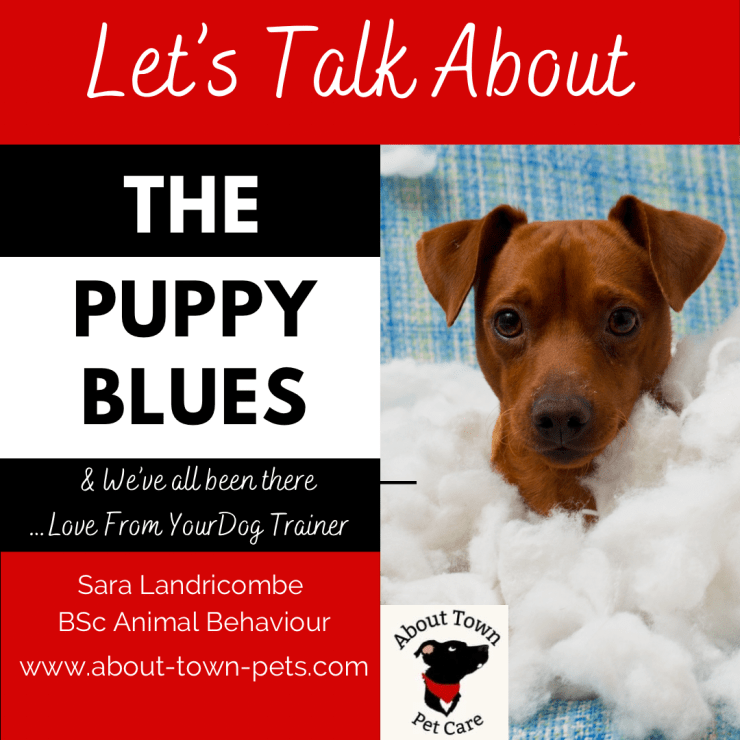
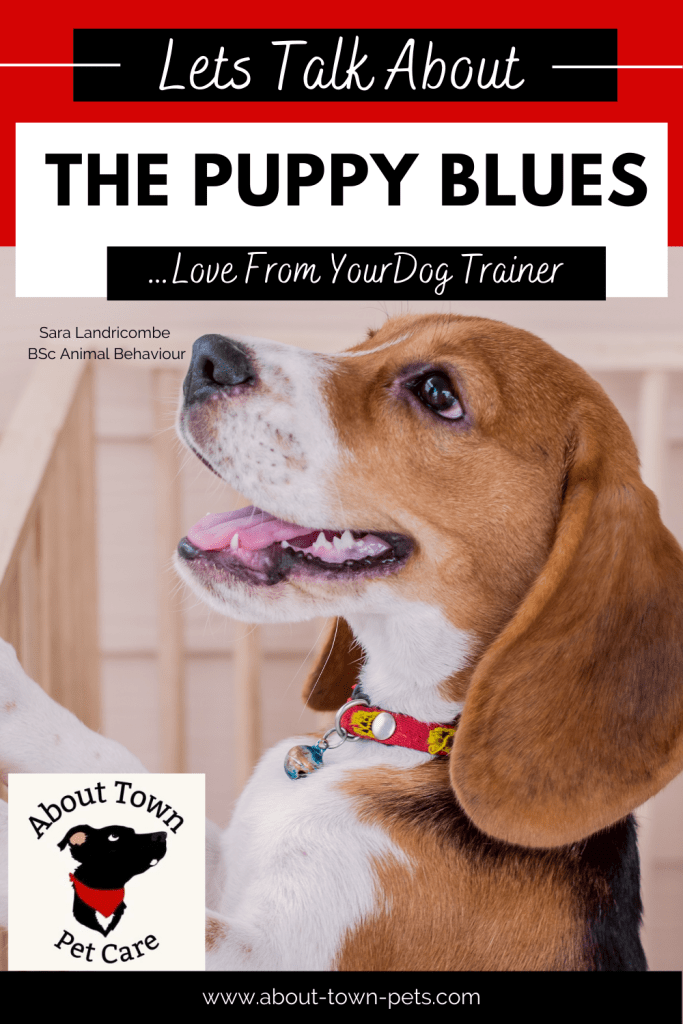
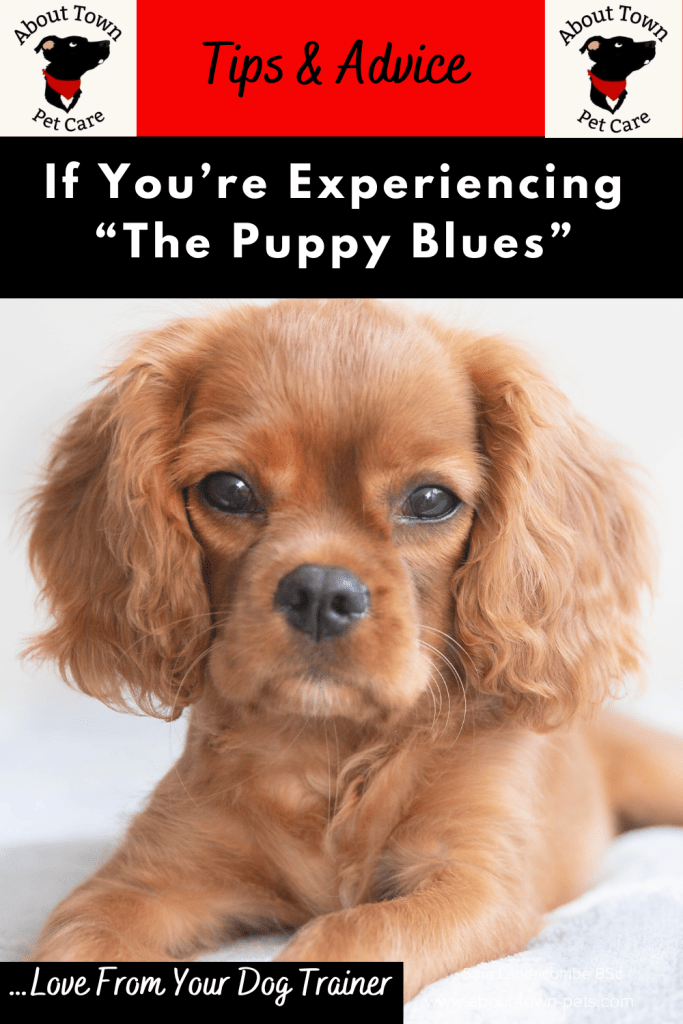
Let’s Talk About The Puppy Blues – It’s Exhausting & Totally Normal

Inspired by a recent post in a puppy group that I frequent on Facebook and by the looks on any of my puppy club members faces when they get to class – I thought it would worthwhile to mention that “The Puppy Blues” Phase of puppy ownership is completely normal and I guarantee that the majority of other small puppy owners are feeling the same way or have done over the past 6 months. I know this because it’s a constant topic online and amongst my own puppy class members who tend to bond over stories of their own puppy blues- it’s exhausting having a puppy but please remember this too shall pass- if you ever make it to a formal puppy class you will notice that it slightly resembles an AA meeting but for young puppy owners. They recall tales of hands that are beaten and bruised by puppy gnashers and bleary eyed first time owners recall how they haven’t really slept for the past three weeks whilst everyone else in the group nods and agrees it’s true in some form or another for them all.

Terrier puppy against a blue checkered background sits amongst fluff pulled from the inside of a cushion – presuming that this is “naughty” behaviour

It’s real “The Puppy Blues” they tend to set in when it dawns on you that this going to be harder and take longer than you thought but I’m here to tell you that its gets easier and we’ve all been there I promise.

Dogs transitions vary with age breed and their personality but as a rule I say stick to a 3 day protocol anything you implement please allow three days for your pup to get used to it – chopping and changing will not help you – don’t be afraid to pop your pup in a crate or play pen in your room so you are at arms length for the first few nights – I promise you are not going to ruin your dog – it’s just come from 8 weeks of mum and siblings on tap and physical comfort at all times so bare this in mind when we are in a hurry to get puppy into a routine

Cavapoo puppy sits amongst toilet roll which strewn around him

Being at arms length allows your puppy to feel safe if he cry’s but allows him to settle when he can- further tips and advice can found on my previous post- here

Then you can start to move the crate/pen etc every three days to the next spot (I assume here that you eventually want your puppy to sleep downstairs) so every 3 days move the crate/pen to the end of the room then just outside the door then downstairs then in the room that you want them in – be prepared to reassure puppy and go back a step if they are really getting very worked up – unfortunately with some dog s(breed and personality have a lot to say in this) letting your dog self soothe as a blanket piece of advice may mean 1/ your create a dog with separation anxiety or 2/ you ruin any crate training you are working on (crate training requires gradual exposure and all positive experiences happen in the crate with the door open and closed) this can’t happen if he starts to associate the crate with scary bedtimes

Also be prepared to go out (physically scoop up your pup if you have too to begin with) on the hour every hour until you have mastered toilet training because puppies cry not only for attention but because they often don’t want to soil their bedding

A good rule here is let them out/physically take them out after eating sleeping playing – they have tiny bodies and tiny bladders for the next 6 months

A beagle puppy stands on his back legs to greet someone on the other side of his playpen

If you prepared well you would be writing off the next 6 weeks a bit like new parents don’t see the light of day for about 6-12 months new puppy owners are likely going to need about 6 weeks minimum to get that pup into some sort of routine and so much training and visiting happens during this time not to mention that your pup is likely not going to be allowed out for the first 3 weeks that have them at home due to the gaps required between their first and second and potentially third vaccinations (unless your puppies breeder was an absolute gem and got your pup vaccinated whilst they were still with them)

⭐️Side Bar – Breeders you get extra superstar status if you – as standard- keep the puppies for an extra 2 weeks with mum and do some beginners handling socialisation and rudimentary toilet training in those first 4/5 weeks with mum – I would be grabbing your hand off for details to pass onto potential new puppy clients😍

I digress…. that happens here and even when pup is eventually allowed out your going to be working on toilet training socialisation and potentially going to puppy classes (I highly recommend that you do😍) even if you’ve had lots of dogs in the past – techniques have changed and there’s about a hundred different ways to train simple things so you are most definite going to pick up tricks and tips) even if it’s how to mark and rewards quickly and efficiently, how to use the three predominant ways of getting initial behaviours and how to look out for puppy body language you may not have noticed before) and SO MUCH more, I know that I want people to learn as much I can teach them with my limited 6 hours that I spend with them because I believe it’s a “hit the ground running” scenario and your window of opportunity is definitely slim – of course you can train older dogs there’s no time limit on training, but your puppy is small and manageable and like a sponge up until about 6 months old so I highly recommend training FOR a scenario rather than when you are IN a scenario.

Adorable tan coloured cavalier King Charles spaniel puppy lies down on a white bed

This means that there’s no point in panicking and hoping your puppy will recall away from another dog in the park instead you should anticipate things that might happen whilst you are out and stay vigilant knowing that you can distract and recall your pup for example BEFORE it’s too late and your puppies attention is lost and you have to scramble to go and get them back – you can manage and mitigate in a scenario but hopefully you’ve put in some solid foundations in the garden in the house or in low distractions whilst you build up and try the same training but in the real world scenarios, understanding that a puppy with lots of repetitions under his belt and a solid “What’s this” (what’s this gets attention and is followed by a high reward) encourages quick responses so you can put them back on areas or move them around or turn in a different direction until the distracting thing has moved on or you get an opportunity to greet the other dog whilst yours is under control (let’s practice polite quick greetings and move on) unfortunately I see too often owners scramble to recall or grab treats from pouches knowing full well that their dog should really be on a long line but that’s an inconvenience so I will just wing it and hope for the best – unfortunately hoping for the best and getting lucky isn’t best practice – train frequently and repeat is a better course of action – practicing at every opportunity is so much more fun for your dog anyway and you will end up with a dog that constantly keeps an eye on you instead of a wayward pup.

So really the point of the post is to persevere because everyone has to go through this phase albeit with a new puppy a teenage dog (see my post on this topic – which will ultimately end up being a secondary puppy blues phase for you) or a newly rescued dog – I will also note here that if it really doesn’t seem to be getting any better for you past the 6 – 8 week mark of puppy ownership I would highly recommend you get in contact with a professional training to help you work through potential training plateaus that might be occurring or something else that might need intervention for you or your pup- I’m not promoting that you struggle just that you allow enough time for your pup to cope before you get some intervention.

If you would like to work with me – please don’t hesitate to contact me HERE

Sara @ About Town Pets 🐶🐾

Ps If you appreciated this post you might also like my previous blog post on Tips & Training Advice For Dogs With Suspected Separation Anxiety

And Also This One- Learn About My Number One Training Tip