How To Socialise Your Puppy & Understanding What Socialisation Really Means

When people hear the words “puppy socialisation”, the image that often comes to mind is a room full of puppies running around playing until their hearts are content.

Or perhaps taking your puppy everywhere possible so they can experience everything as soon as possible.

And while those things can sometimes play a small role in socialisation, they are only a tiny piece of the bigger picture.

In fact, when socialisation is misunderstood it can actually create the very behaviour problems we are trying to prevent.

So let’s talk about what puppy socialisation actually means, and how to approach it in a way that truly sets your puppy up for long-term success.

The Socialisation Window (And Why People Rush It)

There is some truth behind the idea that early exposure is important.

Puppies have a developmental period often referred to as the “socialisation window”, which runs roughly until 16–20 weeks of age.

During this time the brain is particularly flexible and receptive to new experiences.

After this stage the brain becomes a little less adaptable, meaning new experiences may require more gradual introductions.

However, this does not mean you must rush and expose your puppy to absolutely everything all at once.

In fact, doing so can overwhelm many puppies.

Socialisation isn’t about quantity of experiences.

It’s about quality of experiences.


Why “Let Them Play With Every Dog” Isn’t Always Helpful

Another common belief is that puppies should meet and play with as many other dogs as possible.

But if we simply allow puppies to run freely with any dog they meet, a few things can happen.

Some puppies learn that every dog they see means playtime, which can lead to frustration and reactivity later when they are on lead.

Others may be bullied by larger or more confident dogs, while some puppies may become the bully themselves due to size or personality.

Instead, puppy play should be thoughtful and monitored.

A few helpful guidelines include:

  • Pair tiny puppies with other tiny puppies initially
  • Match puppies with size-appropriate playmates
  • Keep play sessions short to begin with
  • Watch for balanced, reciprocal play

Even free-ranging dogs rarely play continuously for long periods. Most natural play sessions last around 10–15 minutes before dogs pause or regulate themselves.

If play becomes too intense or one puppy is overwhelmed, it’s perfectly appropriate to step in and give everyone a break.

Healthy play should allow both dogs to opt out whenever they need to.


Exposure Doesn’t Mean “Everywhere All At Once”

Another common interpretation of socialisation is taking a puppy everywhere possible.

Busy streets, crowded parks, cafés, buses, shops, dog parks…

But this approach doesn’t take into account one very important factor:

Your puppy’s personality.

A confident, outgoing puppy might cope well with a little more novelty.

A quieter or more sensitive puppy may need more gradual introductions.

Rather than trying to expose your puppy to everything immediately, it can be helpful to prioritise experiences in layers.

For example:

Primary Socialisation

Things your puppy will likely encounter regularly in their life:

  • The school run
  • Local parks
  • Car journeys
  • Walking near traffic
  • Visiting a café

Secondary Socialisation

Situations they may encounter occasionally:

  • Visiting shops
  • Meeting new people
  • Bus or train travel
  • Outdoor seating areas

Tertiary Socialisation

General “just in case” exposures:

  • Umbrellas
  • Scooters and bikes
  • Loud household noises
  • Moving vehicles
  • Children running or playing

Many common behaviour problems later in life — such as barking at scooters, reacting to buses, or being nervous of tall people — often stem from missed or rushed exposure during puppyhood.


The Risk of Doing Too Much: Flooding

In the dog training world, overexposure has a name.

It’s called flooding.

Flooding happens when a puppy is exposed to something beyond their ability to cope with.

This pushes them over what we call their threshold.

When this happens, puppies may respond in a few ways.

Some may shut down completely, becoming very quiet or still. This can sometimes be mistaken for calm behaviour, but in reality the puppy may simply be overwhelmed.

Others may become overstimulated, showing behaviours such as:

  • Mouthing
  • Grabbing
  • Growling
  • General agitation

Neither response means the puppy is “being naughty”.

It simply means the situation was too much, too soon.


Learning to Read Your Puppy’s Body Language

One of the most valuable skills for new puppy owners is learning to observe what their puppy is communicating.

Ask yourself:

  • Are they trying to move closer to investigate?
  • Are they turning away or increasing distance?
  • Are they doing a mixture of both?

We also need to think not only about what puppies are exposed to, but how long they remain in that situation.

Some puppies cope well with a new experience for a short period, but may need frequent breaks.

Subtle signs that something required effort for your puppy might include:

  • Shaking off their body
  • Yawning
  • Lip licking
  • Turning their head away
  • Stopping to scratch

These behaviours can actually be self-regulation.

If you notice them, it’s a great time to reward your puppy and give them space to move away.

A cheerful “good shake!” and calmly increasing distance can go a long way in helping puppies process what they’ve just experienced.


Socialisation Can Happen At A Distance

Another common misconception is that puppies must be right next to the thing they are being socialised to.

In reality, socialisation can happen very effectively from a distance.

Many puppies — particularly more thoughtful or sensitive ones — are excellent observers.

They prefer to watch a situation first, gathering information before deciding whether it feels safe to approach.

This observational learning is incredibly valuable.

Sometimes the best socialisation session looks like sitting quietly on a bench while your puppy watches the world go by.

The Power of a “Chaperone” Dog

Because dogs are social learners, they often learn a great deal through mimicry.

A calm, confident adult dog can act as a wonderful teacher for a young puppy.

Watching another dog calmly walk past traffic, greet people politely, or ignore distractions can help a puppy understand that the situation is safe.

However, it’s important that the chaperone dog is:

  • Calm
  • Predictable
  • Comfortable around puppies

This is one of the reasons I often suggest allowing a first dog to fully mature before introducing a second.

A well-adjusted adult dog can become a fantastic role model.


Structured Socialisation vs The Dog Park

If you don’t have access to calm, well-mannered dogs, consider joining a structured puppy socialisation group where interactions are guided and monitored.

This helps ensure puppies learn appropriate play skills while staying safe.

In contrast, dog parks can sometimes be overwhelming environments, especially for young puppies. They often contain dogs of mixed temperaments and energy levels, which can easily lead to overstimulation or negative experiences.

Thoughtful exposure is far more beneficial than uncontrolled interactions.

What You Can Start Working On Early

Socialisation isn’t just about the outside world.

Many important foundations can begin within the first week or two of bringing your puppy home, including:

  • Short micro-absences to build independence
  • Introducing a marker cue such as “yes”
  • Teaching your puppy to settle on a magic mat
  • Beginning gentle crate training
  • Establishing good toilet training routines

These small early lessons help puppies feel safe, confident, and capable as they explore their environment.


Socialisation Is About Confidence, Not Chaos

True puppy socialisation isn’t about doing everything quickly.

It’s about helping your puppy feel safe, curious, and capable in the world around them.

That means:

  • Gradual exposure
  • Thoughtful play
  • Watching body language
  • Allowing rest and recovery

When we approach socialisation this way, we don’t just create a puppy who tolerates the world.

We help raise a dog who feels comfortable living in it.

Find my socialisation check list below (remember to take it slow) and more importantly have fun with your new pup.
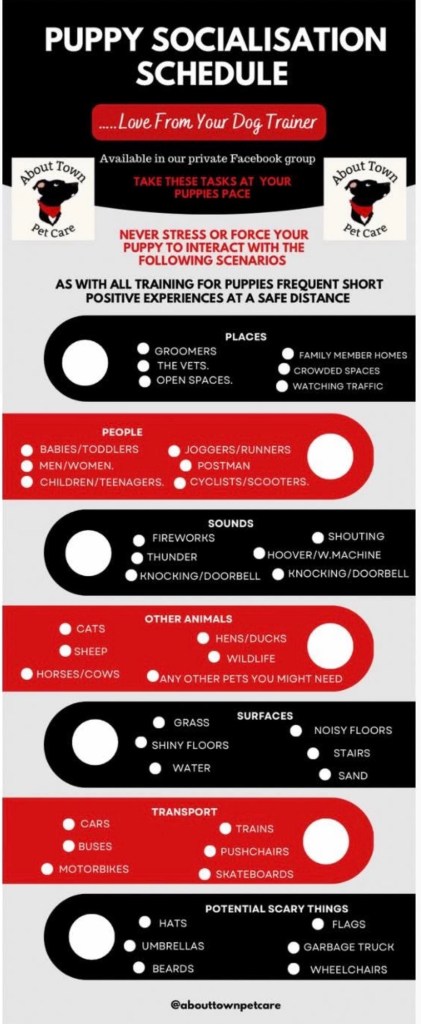
….love from your friendly neighbourhood dog trainer and behaviourist S. X

If you found this blog post helpful you might also want to read my previous blogs in the series – Seven of the most common issues found in puppy training👇

Start here with Part 1 – Help my puppy won’t settle at night

Part 2 – The Toilet Training Timeline

Part 3- How to prevent jumping up

Part 4- Nipping & Biting – The teething timeline

Part 5- Pulling – How to get started with loose lead

Part 6- Six tips for recall in puppies

Help My Puppy Is Still Having Accidents In The House ! Understanding The Toilet Training Timeline

Part 2 in my 7 Most Common Training Issues For Puppies Series.

If you’ve ever stepped in a warm surprise at 6am, you’re not alone.

Toilet training is easily one of the top seven reasons new puppy parents reach out to me. It can feel frustrating, exhausting, and sometimes confusing — especially when you’re sure they “know what they’ve done.”

Let me reassure you straight away:

Your puppy isn’t being naughty.
They aren’t being spiteful.
And they absolutely aren’t trying to upset you.

They’re just a baby.

Let’s break this down properly and set you (and your pup) up to win.

First Things First Is Your Puppy S.A.F.E?

Before you begin any settling or crate training work, or even considering confining your puppy in any way please ask yourself:

Is my puppy…

  • Snoozy?
  • All tired out?
  • Full?
  • Empty?
  • Or SAFE if it’s easier to remember

If your puppy is overtired, overstimulated, hungry, or needs the toilet, you won’t get much training done. A safe puppy is a successful puppy — so make sure they are secure in a pen or crate only when their needs have been met first.

Toilet training success begins with meeting biological needs.

Understanding Bladder Development

A very general guide for bladder holding ability during the day:

  • 8–10 weeks: 1 hour (sometimes less)
  • 10–12 weeks: 1–2 hours
  • 3–4 months: 2–3 hours
  • 4–6 months: 3–4 hours
  • 6+ months: Increasing gradually with maturity

Overnight is often slightly longer because metabolism slows during sleep.

In the early weeks, I strongly recommend:

Take them out every hour, on the hour.

Yes — really.

You’re not being excessive. You’re preventing accidents and rehearsing success.

Every accident indoors is practice at going indoors.
Every success outside is practice at getting it right.

Let’s Talk About Substrates

(The Surface Matters More Than You Think)

One key area many people overlook is substrate preference.

Dogs develop preferences for the surface they eliminate on. If a puppy learns to wee on soft absorbent material (like puppy pads), they may later seek out:

  • Rugs
  • Carpet
  • Bath mats
  • Laundry piles

Instead of relying on puppy pads (which also contain ammonia scents that can encourage repeat use), consider bridging the gap more thoughtfully.

If you live in a flat or can’t access the garden quickly, try:

  • A tray with well-drained astroturf
  • A shallow box with garden pebbles
  • A small patch of real turf if possible

This helps mimic outdoor textures and makes the transition easier later.

Why I Don’t Recommend Puppy Pads

Puppy pads can:

  • Encourage indoor toileting habits
  • Smell of ammonia (which signals “toilet here”)
  • Confuse puppies when you later ask them to go outside

If accidents happen (and they will), calmly:

  1. Scoop puppy up and take them outside immediately.
  2. Clean the area with an enzymatic cleaner (such as Simple Solution).
  3. Avoid drawing attention to the mistake.

Standard cleaners don’t fully remove the scent markers — but your puppy’s nose will still find them.

Timing Is Everything (You Have About 8 Seconds)

Dogs Learn Through Associations

You have roughly 8 seconds for reinforcement to connect to the behaviour.

If you shout after discovering a puddle 5 minutes later, your puppy doesn’t link it to the wee. They link it to:

  • You coming into the room
  • You being loud
  • Or simply your presence

That’s it.

Which brings me to something important…

“He Knows What He’s Done” — No, He Doesn’t

That “guilty look”?

Head turned away.
Lip licking.
Blinking.
Crouching.

That’s not guilt.

That’s appeasement behaviour.

Your puppy is trying to diffuse a situation because you sound cross or scary. In some sensitive puppies, raised voices can even trigger more urination due to stress.

Remember:

This is a tiny baby animal with an immature nervous system.

Stay calm. Every time.

Set Them Up to Win

Instead of reacting to mistakes, prevent them.

Take your puppy out:

  • After waking
  • After eating
  • After drinking
  • After playing
  • After training
  • Before settling
  • Every hour in the early weeks

When they go outside?

Throw a little party.

Soft praise.
A cheerful “yes!”
Maybe a small treat. But don’t over do the praise because this can cause your puppy to quickly hold on to their pee whilst they check to see what all the excitement is about 😅 Gentle encouragement (save your enthusiasm for when the toileting have finished entirely) 👍

Positive reinforcement builds clarity and confidence.

Breaking Up the Day

If you’re out for several hours, accidents are almost guaranteed.

A mid-day puppy visit from a trusted pet sitter can:

  • Prevent accidents
  • Protect your training progress
  • Reduce stress
  • Support bladder development appropriately

Sometimes success is simply about realistic scheduling.

The Bigger Picture

Toilet training isn’t about dominance.
It’s not about stubbornness.
It’s about biology, consistency, and clarity.

Your job is to:

  • Manage the environment
  • Meet needs before settling
  • Reinforce the behaviour you want
  • Calmly clean what you don’t

No drama. No punishment. No shame.

Just guidance.

And if you’re feeling tired — that’s normal too.

You’re raising a baby.

If toilet training feels overwhelming, you’re not failing. You might just need a structured plan tailored to your home, schedule, and puppy.

And that’s exactly what I’m here for- Love From Your Friendly Neighbourhood Dog Trainer & Behaviourist.

If you found this blog post help be sure to check Part 1-7 in my; SEVEN most common puppy issues series starting with Part 1 here Part 1.Help My Puppy Won’t Settle At Night Or

Part 3 Jumping Up & How To Prevent It

Also if you wanted access to all seven videos in the puppy issues series as well as a step by step crate training guide you can find access to my Webinar Bundle Here currently discounted to £59 for four webinars plus many extras.

Be the FIRST to read my newest blog posts and get access to all of my classes and webinars by signing up to my bi weekly Newsletter Sign Up Here

Help! My Puppy Is Biting – Understanding the Teething Timeline

Most puppy biting consultations tend to land on my desk at exactly the same time.

Around 12 to 16 weeks.

And that timing is not a coincidence.

It’s teeth and development colliding.

By this stage, many owners feel like their once sweet, sleepy puppy has suddenly become bold, mouthy, and determined to bite everything — including hands, sleeves, ankles, and furniture.

It can feel personal.
It can feel intentional.
And it can feel like things are getting worse instead of better.

But what’s usually happening is far more predictable — and far less dramatic — than it seems.


The Teething Timeline (That Nobody Warns You About Properly)

Puppies don’t suddenly “start teething” at four months. It’s been happening in stages since birth.

Here’s a simplified timeline:

  • Incisors begin erupting at around 2–3 weeks
  • Canines follow at roughly 4 weeks
  • Premolars and molars appear between 3–6 weeks
  • The last baby molars are typically through by 6–8 weeks — often right when puppies go home

That means most puppies arrive in their new homes with a full set of baby teeth already in place.

Then comes the next phase.

Permanent teeth begin replacing baby teeth “tooth for tooth”, plus 14 additional adult molars.

By around 6–7 months of age, most dogs have their full adult set of 42 teeth.

The peak discomfort for many puppies?
Right around 12–16 weeks.

Exactly when owners start noticing “big personality changes”.


Where Owners Get Misled

Teething doesn’t happen in isolation.

It overlaps with a developmental stage where puppies become:

  • More curious
  • More confident
  • More mobile
  • More experimental

They are exploring the world with their mouths at the same time their gums feel uncomfortable and their brains are developing rapidly.

This is often when I hear words like:

  • “Dominant”
  • “Aggressive”
  • “Testing boundaries”
  • “Trying it on”

But what you are usually seeing is a combination of:

  • Physical discomfort
  • Normal exploratory behaviour
  • Increasing independence
  • Reduced sleep
  • Overstimulation

It is development — not defiance.

Understanding that early changes how you respond, and that response matters.


Why Punishment Backfires During This Phase

When biting increases, many owners instinctively increase rules.

More “no”.
More corrections.
More pressure.

But the most effective approach during this stage is usually the opposite.

Push management and redirection first. Not punishment.

Because if a puppy has free access to the entire house 24/7, you are setting both of you up to fail.


What Management Actually Means

Management isn’t giving up on training.
It’s creating an environment where training can succeed.

That means:

  • Reducing access rather than increasing rules
  • Using a pen, crate, or safe confinement area so supervision is realistic
  • Keeping the environment boring and safe
  • Making legal chew items easy to find
  • Making illegal items impossible to reach

If shoes, table legs, and sleeves are constantly available, chewing them is not misbehaviour — it’s opportunity.

A well-managed environment lowers rehearsal of unwanted behaviour and reduces frustration on both sides.


But Training Still Matters

Management alone isn’t enough.

Owners still need a clear, calm plan for what to do in the moment when biting happens.

That might include:

  • Redirecting to an appropriate chew
  • Pausing interaction briefly
  • Checking for overtiredness
  • Short, structured play sessions
  • Ensuring enough rest throughout the day

Because many “bitey” puppies are actually overtired puppies.

And overtired puppies make poor decisions.


The Reframe That Changes Everything

When we understand that 12–16 weeks is:

Teething + development + growing independence

…we stop asking:

“Why is my puppy being like this?”

And start asking:

“How can I support this stage better?”

That shift reduces blame.
It reduces panic.
And it reduces the temptation to label normal development as something more concerning.


A Final Reassurance

If your puppy feels mouthier than ever right now, you are not alone.

This stage is common.
It is predictable.
And it is temporary.

With thoughtful management, appropriate outlets, and realistic expectations, most puppies move through this period without long-term issues.

It’s not dominance.
It’s not aggression.
And it’s not a character flaw.

It’s development.

And development needs guidance — not punishment.

And if you need further help with your puppy I have another puppy class in Plymouth on March 1st click here to book 👇🐕

6 Weeks Of Puppy Class Here

If you need extra help I am available online for 1-2-1 help here 👇

Want Regular Updates Sign Up For My Weekly Newsletter Here👇

Tap Here For Newsletter Sign Up

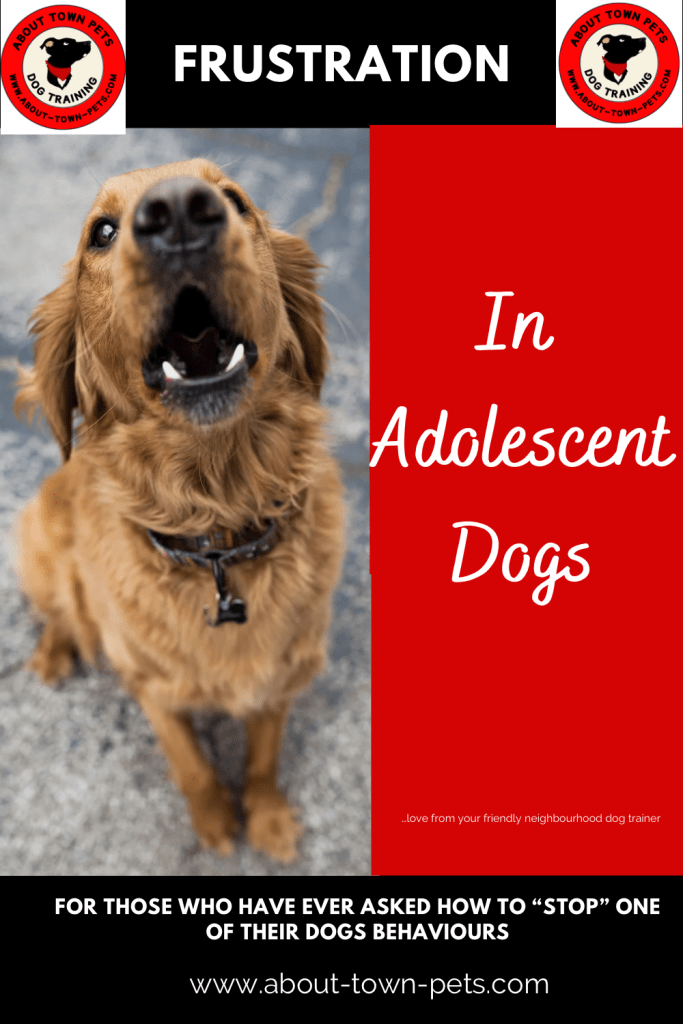
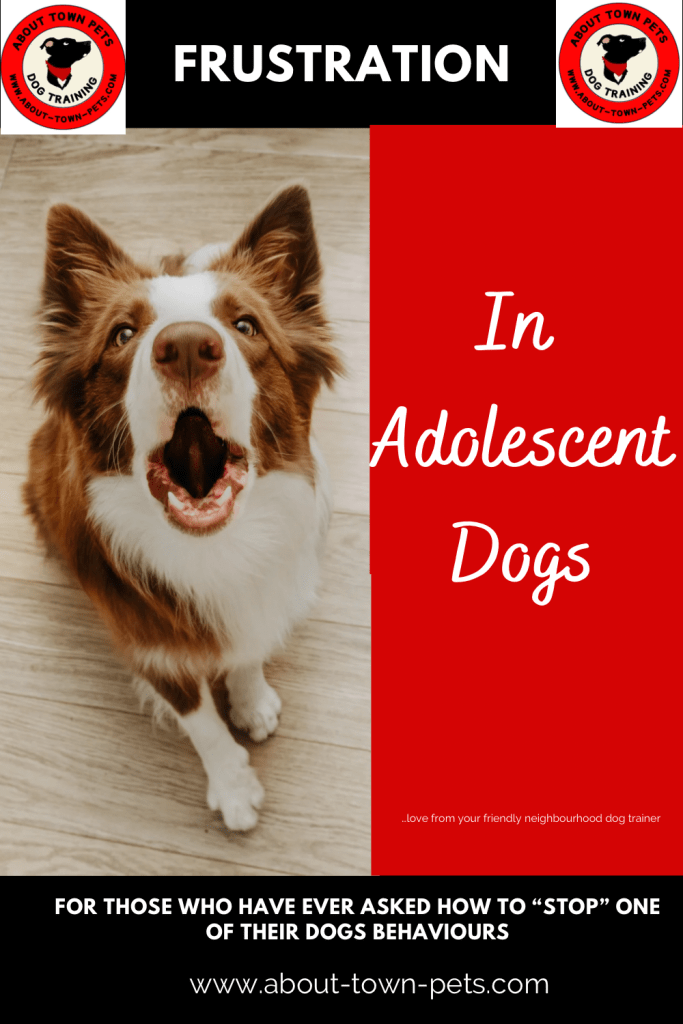
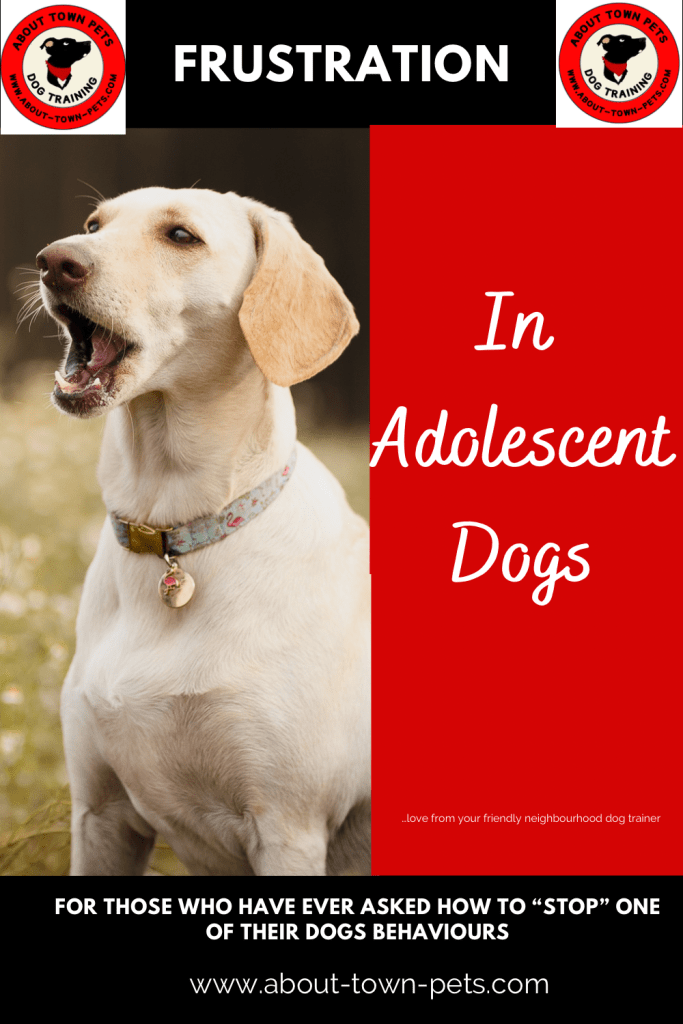
Frustration in adolescent dogs

Adolescence Isn’t Disobedience: Understanding the 7-Month-Old Spaniel Brain

I recently responded to a post about a 7-month-old Cocker Spaniel who was “pulling like a train” and they were asking for a harness that “stops pulling”. Other phrases that kept coming up were ones I hear all the time:

“He’s suddenly forgotten everything.”
“His attention span is like a gnat’s.”
“He’s pushing boundaries and meeting force with force.”

Welcome to canine adolescence.

This phase can feel like all your hard work has unravelled overnight, but what you’re seeing isn’t stubbornness, dominance, or your dog “being naughty”. It’s biology.


The Teenage Dog Brain (or: Why Your Dog Can’t Put the Brakes On)

A 7-month-old dog is roughly equivalent to a 14-year-old human teenager.

Their body is developing rapidly, hormones are surging, and crucially — their frontal cortex hasn’t caught up yet.

The frontal cortex is the part of the brain responsible for:

  • Impulse control
  • Emotional regulation
  • Decision-making
  • The ability to pause and think before acting

In dogs, this area doesn’t fully mature until around 18 months of age.

So when we expect a teenage dog to “just make better choices”, we’re asking them to use a part of the brain that quite literally isn’t finished yet.


Be the Swan 🦢 (Even When You’re Screaming Inside)

I often tell clients to be like a swan.

On the surface: calm, graceful, unbothered.
Underneath: paddling like mad, thinking “for goodness sake”, and feeling frustrated.

Feeling frustration is normal. It’s human. It’s part of our emotional repertoire.

But dogs don’t need us to win against them — they need us to be smarter than their nervous system.

Meeting force with force during adolescence often escalates behaviour, because the dog simply doesn’t have the neurological capacity to regulate themselves yet.


What Adolescent Stress Actually Looks Like

During this phase, dogs become more easily frustrated, and stress shows up in ways that often confuse owners.

You might see:

  • Scratching in the middle of play
  • Yawning when nothing seems tiring
  • Shaking off when they’re not wet
  • Avoiding things they were previously fine with
  • Lunging or barking at familiar sights
  • Sudden “out of context” behaviours

These are stress displacement behaviours — signs that the dog’s nervous system is struggling to cope.

When pressure continues, dogs may opt for space-increasing behaviours, such as:

  • Pawing at you to make you stop
  • Mouthing or grabbing clothing
  • Snapping to create distance

This isn’t aggression — it’s communication.


Redirect, Don’t Confront

Instead of challenging the behaviour head-on, I prefer redirection using cues the dog already understands well.

One of my favourites is:

“What’s this?”

It taps into curiosity and makes the dog come towards you to see what they’re missing out on.

If you can teach:

  • “Up up” → you can teach “Off”
  • “Come and see” → instead of pushing away

Always ask yourself:

What is the opposite of the behaviour I don’t want?

Examples:

  • Jumping up → a solid sit on a mat
  • Mouthing → stopping and picking up a toy
  • Recall issues → working very close for a long time to build value in staying with you

Distance is earned. Adolescents need to relearn proximity.


Puberty = Instincts Switching On

Puberty typically hits between 7–9 months, and this is when a dog’s breed-specific behaviours really start to emerge.

Under pressure or frustration, dogs revert to what they were selectively bred to do.

For example:

  • Spaniels like to hold and possess
  • Retrievers like to carry things in their mouths
  • Guardian breeds may grab and pull down

These behaviours often increase when:

  • The dog is frustrated
  • The dog doesn’t know what’s being asked
  • Training lacks clarity
  • Tasks change too quickly

Dogs don’t default to calm thinking under stress — they default to instinct.


Why Frustration Tips Over So Fast (Especially on Lead)

Frustration builds pressure in the nervous system, and pressure needs an outlet.

This is why:

  • Dogs are often more reactive on lead than off
  • Tension on the lead escalates behaviour
  • Lack of movement increases emotional overflow

Under pressure, behaviour can escalate quickly into:

  • Barking
  • Lunging
  • Snapping

Not because the dog is “bad”, but because their coping capacity has been exceeded.


A Note on Harness Battles

If getting equipment on and off has become a battle, you have two options:

1. Change the Equipment

Some dogs struggle with harnesses that go over the head.
step-in or Velcro harness can remove that stress entirely.

2. Go Back a Step

Slow the whole process down.

  • Break it into smaller steps
  • Reinforce calm behaviour
  • Reduce the “faff”

Sometimes removing the equipment altogether for a short reset helps, because the dog has learned to predict:

“Something uncomfortable or stressful is about to happen.”

If in doubt:

  • Change the cue
  • Change the equipment
  • Start again from scratch

There is no failure in resetting — only information.


The Takeaway

Adolescence isn’t a training problem.
It’s a developmental phase.

Your dog isn’t giving you a hard time — they’re having a hard time.

With clarity, patience, and an understanding of what’s happening inside that teenage brain, this phase doesn’t have to be something you “get through”.

It can be something you guide them through — calmly, consistently, and with empathy.

And yes… sometimes while paddling furiously under the surface 🦢

If you appreciated this post feel free to check out my previous post Help My Puppy Won’t Settle At Night here👈

Before you go you might want to check out my 12 Days Of Woofmas by adding your email to my newsletter sign up page Here to get access to 12 days of canine science right into your inbox there will also be 12 videos to accompany those emails on a private section of this website as well as daily tasks to complete via email – so if you want to keep yourself busy over the Christmas period feel free to sign up now 👍

Love from your friendly neighbourhood dog trainer and behaviourist.

S x

https://about-town-pets.com/newsletter-sign-up/

Help! My New Puppy Won’t Settle at Night

Part 1 Of The 7 Most Common Puppy Issues Series

A gentle, gradual guide to peaceful nights in the first few weeks home

Bringing a new puppy home is magical… and exhausting. One of the most common worries I hear from new puppy parents is:

“My puppy just won’t settle at night. Are we setting her up to never be able to sleep alone?”

Take a breath — the answer is no.
In fact, a gradual, methodical transition is the very thing that prevents separation-related problems later on.

Your puppy has just come from sleeping in a pile of warm littermates. Suddenly she’s in a new home, new smells, new routines, and without her usual nighttime company. Reassurance in these early weeks isn’t “spoiling” — it’s meeting a biological need for safety.

Let’s walk through a gentle, practical plan that helps your puppy settle confidently at night, whether you’re using a crate or a playpen.


Step One: Choose Where You Want Your Puppy to Sleep Long-Term

Before you start, decide what your end goal is. Do you want your dog to sleep:

  • In a crate beside your bed?
  • In a crate or pen downstairs?
  • In a specific room like the kitchen or living room?

There’s no wrong answer — choose the setup you can maintain long-term.

Tip: Most people find starting with the crate beside the bed much easier. You’re close enough for quick reassurance without allowing rehearsals of prolonged crying.


Option 1: Start Beside the Bed (My Recommended Option)

Begin with the crate or pen right next to the bed, within arm’s reach. Your presence helps your puppy regulate her emotions and settle back to sleep after tiny wobbles.

Week-by-week progression:

Week 1 — Right at your bedside
Your hand can reach the crate easily. Reassure with a quiet word or a gentle touch if needed.

Week 2 — End of the bed
Move the crate every 3 days or so, keeping your puppy successful and calm.

Week 3 — Outside the bedroom door → Hallway → Bottom of the stairs
Small, steady changes. No big jumps.

Week 4 — Final sleeping spot (e.g., living room or kitchen)
You may need to sleep on the sofa for a night or two depending on your puppy’s confidence. Expect to get up for toilet trips and brief reassurance — totally normal.


Option 2: Start Where the Crate Will Live (Downstairs)

If you prefer to begin downstairs, place the crate in the room you intend to use long-term — kitchen or living room usually works best.

For the first few nights, sleep on the sofa nearby.
As your puppy settles more easily, gradually increase the distance between you and the crate until you’re no longer needed in the room.

This mirrors the same progression as Option 1, just starting in a different location.


Important Caveats (The Things People Forget!)

1. Scoop-and-go is absolutely fine

In the early days, if your puppy wakes and you need to take her out now, pick her up and go quickly to avoid accidents. You’re not making a habit that will last forever — you’re preventing one.


2. The crate or pen must be big enough

Your puppy needs two zones:

  • A cosy sleep area
  • An area they could move to if they needed to toilet

Puppies genuinely don’t want to soil where they sleep. If the space is too small, crying or accidents increase.


3. Set your puppy up for sleep success

Before bedtime, make sure she has:

  • Been out to toilet
  • Played a short game (nothing too exciting!)
  • Had her final meal or snack

A tired belly and brain settle best.


4. Phase out puppy pads sooner rather than later

Pads often encourage puppies to toilet wherever they smell previous pee spots.
If you use them temporarily, clean the area with an enzymatic cleaner to remove ammonia scents — this prevents “Oh, I peed here before!” repeat performances.


Reassurance Is Not a Bad Habit — It’s Attachment Building

Your puppy is not manipulating you. She’s not being “naughty.”
She’s simply calling out for the family she knows is somewhere in the house.

Call-and-response crying is normal in the first weeks.

What you’re watching for is intensity:

  • A few minutes of fussing? Normal.
  • More than 20 minutes with rising distress? She needs help.

After a toilet check, offer calm reassurance — a hand on the crate, sitting nearby for a moment, a quiet voice. Once she settles, return to bed.

This is how puppies learn:
“I’m safe. My human comes when I need them. I can go back to sleep.”

That confidence becomes the foundation for healthy independence later.


Want Help With Crate Training?

The full gradual crate-training guide is available in my Black Friday Weekend Webinar Bundle which I’ve extended until midnight tonight for those who want a step by step guide on not only crate training all things home alone training as well as three of my other lost popular webinar topics :

Separation Anxiety Survival Guide

Let’s Learn Loose Lead (prevent pulling)

Restart Recall & Creating A FOMO Recall

Tiny Dog Behaviour – Debunking The Little Dog Syndrome Myth

Plus step by step guides for both crate training and creating an off switch by training a Settle In Real Life – if this sounds right up your street then grab it at its current price of £35 instead of my normal bundle deal of £70 Book the last minute webinar bundle here 👈


If you need support applying the steps with your puppy , just reach out — that’s what I’m here for.

And if you appreciated this post you might want to check out my previous blog post Don’t rush your rescue dog! Which applies to rehoming young dogs also👍

Also be sure to check out the rest of my 7 MOST COMMONNISSUES IN OUPOIES SERIES here 👉Part 2 – Understanding The Toilet Training Timeline

Or Part 3 – Jumping Up & How To Prevent It

And to be the first to read my newest blog posts and get access to my latest news and offers be sure to sign up to my Newsletter Sign Up Here👍

Or even better follow me on Pinterest Here

Love from your friendly neighbourhood dog trainer- S x

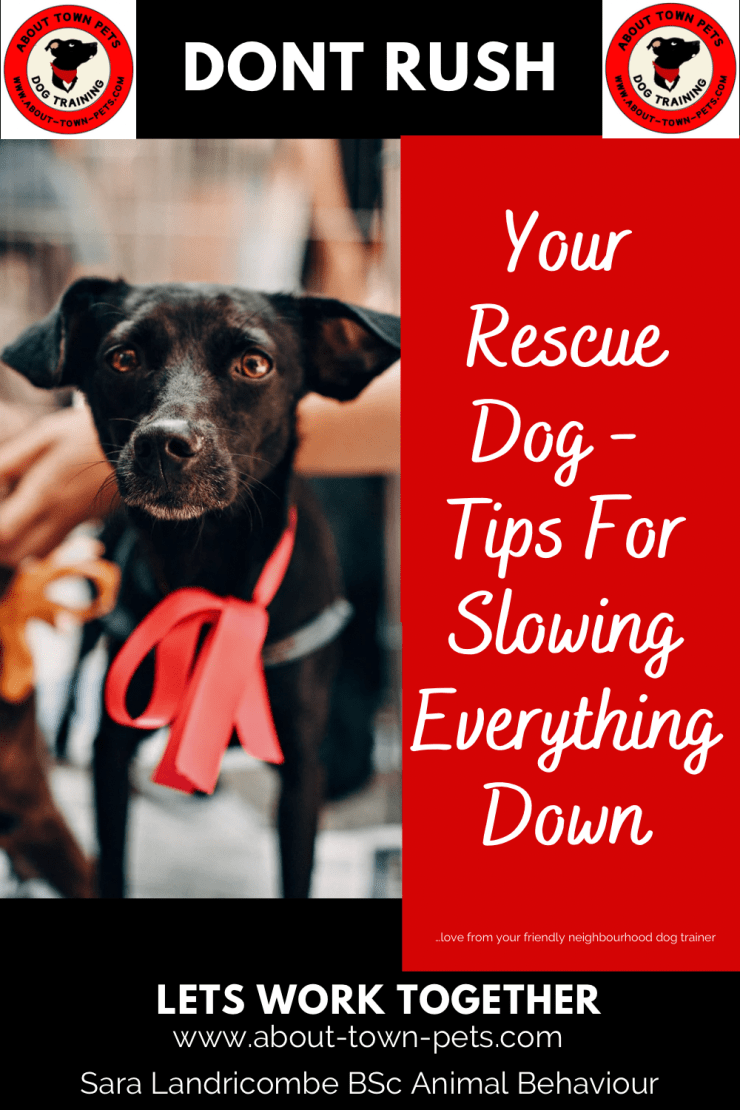
Don’t Rush Your Rescue Dog

There’s nothing quite like the excitement of bringing home a new dog — especially a rescue dog who has finally found the loving family they deserve. But if your new furry arrival has come from a kennel environment, particularly abroad, they need something far more important than adventures and busy schedules:

✨ Time to decompress. ✨

The Decompression Phase (4–6 Weeks Minimum)

We humans want to do all the things right away — walks, visitors, dog park trips, training classes. But for a rescue dog, especially one who has traveled a long way, this period is a huge life change.

Their nervous system needs time to recalibrate after the stress they’ve experienced.

✅ Keep outings short and calm
✅ Allow lots of quiet observation time
✅ Home is the safe place — help them learn that slowly

For the first few weeks, think less “walks” and more:

🚪 Garden sniffing
👀 Watching the world safely
🛋️ Chilling with their new family

You’re building trust — not a schedule.


Sleep + Chewing = Emotional Regulation

One of the best things you can do right now?

🛏 Prioritise rest.
🦴 Offer healthy things to chew.

Chewing and rest promote calmness and basically tell your dog’s brain,
“You’re safe here.”

Try a cycle like:

• Short enrichment or training session
• Snuffle mat, lick mat, or a safe chew afterwards
• Encourage a nap

Foreign rescue dogs are often overstimulated by all the new sounds and sights — not truly tired. They may need help learning how to settle initially.


Toilet Training Troubles? Check For Giardia

If there’s a lot of pooping happening (everywhere!) — don’t panic. For dogs coming from kennel environments or a stressful journey, Giardia is extremely common.

💩 Take a stool sample to the vet
🧼 Double-clean accidents with an enzymatic cleaner
⚠️ Remember: It’s highly contagious and can reinfect

A stressed gut = a stressed brain, so clearing up tummy issues will help behaviour dramatically.

In some cases, a 24-hour fast (with plenty of hydration), followed by a gentle/bland diet, can help — but always check with your vet first.


Restart Toilet Training — Like You Would A Younger Dog

Once any medical issues are addressed, go back to basics:

✅ Frequent garden trips (after sleep, play, meals)
✅ Mark and reward immediately
✅ Set them up for success from the start

And for now, track food intake until their digestion stabilises — consistent meals mean consistent results.


How Much Exercise Is Right?

You may have heard the 5 minutes per month of age guideline.
It’s not a rule — it’s a reminder.

New rescue puppies should not be walked for ages on their tiny developing joints. Short, positive exposure is the goal.


Save the big adventures for later once they’re confident and secure.

I love using 3-day walk cycles for balance:
1️⃣ Explore a little
2️⃣ Practice calm confidence-building activities
3️⃣ Rest and reset

Your relationship is the walk — not the mileage.


The Adolescent Phase Is Coming…

If your female pup isn’t spayed yet, be prepared for:

• Restlessness
• Nesting behaviour
• Possible indoor accidents

Many females come into season around 9–10 months but it can vary — keep an eye out for behavioural changes and speak to your vet about timing.

For male adolescent dogs behaviours spike when hormones set in around 6-9 months old and can continue until 12 months and even 18 months old for larger breeds.


Final Words: You’re Doing Great ❤️

Your rescue dog doesn’t need perfection — they need patience.

By slowing the pace, supporting their recovery, and listening to their needs, you’re helping them feel safe enough to blossom into the dog they were always meant to be.

Because the real magic happens when a rescue dog realises:

🫶 They are home.

……love from your friendly neighbourhood dog trainer and behaviourist.

And if you found this blog post helpful please check out my previous blog post here – Debunking the “Little Dog Syndrome” Myth

Can’t make an in person session consider checking out my upcoming zoom webinar topics and using this link to book Book Weekly Webinars Here👈


And if you would further help and live in the Plymouth or surrounding area please book in by filling in my training and behaviour questionnaire here New 1-2-1 Clients Start Here

Thanks . S

Little Dog Syndrome- What Small Breeds Really Need

Small dogs need big personalities for you to “listen” to them.

If you’ve ever heard the phrase “little dog syndrome”, you might picture a tiny dog with big attitude—yapping, bossing other dogs around, maybe even snappy or reactive. It’s a phrase many people toss around with a wink. But as with many catchy sayings, the reality is far more nuanced than it seems.

What the phrase implies

The term suggests that small-breed dogs are inherently more problematic: more yappy, more aggressive, more spoiled. It frames size as the root cause of behaviour problems. But the truth: size alone doesn’t determine behaviour. What does matter is why behaviour issues arise — and how we support small dogs (and their owners) differently.

What the science reveals

  • Research shows that smaller dogs do have higher odds of owner-reported fearfulness and aggression than larger dogs — but size is just one of many factors. For example, one large-scale study found that smaller body size correlated with higher risk of fear and aggression, but the authors emphasised that this is a broad, population-level trend, not a destiny for any individual dog.
  • Another key piece: early life and maternal care matter a lot. Puppies whose dams were less stressed, who gave more consistent licking/nursing and contact, develop into calmer, more resilient adults.
  • Behaviour issues in small dogs are frequently driven by pain or medical issues (for example dental disease, joint problems, airway or spine issues) rather than “just being a small dog with attitude.” When pain is relieved, behaviour often improves.
  • Nutrition and training style matter too: diet can support behaviour improvement (though it isn’t a silver bullet) and training methods that rely on rewards, respect and clear communication outperform punitive methods — especially for smaller dogs.

So what’s really at play?

Here are the bigger drivers behind what gets labelled “small dog syndrome”:

  • Higher vigilance: Many small breeds were bred to alert or watch (rather than herd or guard). That means a lower threshold to respond to stimuli (doorbell, stranger, passer-by).
  • Owner handling biases: Small dogs are easier to pick up, more likely to be carried, less likely to be handled like larger dogs (walked as much, trained as much). This can reduce their confidence and increase fear.
  • Overlooking health issues: Because they’re small, pain or discomfort in the joints, spine, teeth or airway may be overlooked — and an irritable, anxious dog often looks like a behaviour problem.
  • Inadequate training/enrichment: Smaller dogs still need outlets for their breed-instincts, socialisation, movement and mental challenges — these get missed if we think “small = easy.”
  • Environment and management: Running into strangers, dogs or stimuli at high speed without a plan creates stress; small dogs are more vulnerable to feeling “trapped” (less body mass, fewer escape options) so reading early signals matters.

What you can do to advocate for your small dog

1. Read the body language early

Look for the subtle-before-the-problem: lip licks, head turn, freezing, shifting weight, crouching or making the body smaller. These aren’t “cute” — they’re stress signals. Intervene early: give space, create a barrier (your body, a bench), redirect to a positive behaviour (scatter a few treats, hand-target, escort to safe zone).

2. Check health/pain before punishing behaviour

Especially in small breeds, do a “vet audit” when you see a new or changed behaviour: dental examination (crowded jaws are common); joint check (patella, spine/neck, hips); airway/trachea or breathing issues; signs of neuropathic pain (especially in certain breeds). Pain-driven behaviour is teachable — but only after treating the cause.

3. Tailor training to small-dog size & needs

  • Use a well-fitted Y-front or front-clip harness instead of a tight collar (especially for toy or brachycephalic breeds)
  • Teach “station” (mat on the floor or low bench) so your small dog has a safe base
  • Practice “hand-target,” “middle” (dog between your legs), “scatter-sniff” breaks during walks
  • Use short sessions frequently (2–3 mins several times a day) to suit small body/attention spans
  • Build “consent handling” (dog comes to you for grooming/touch rather than you always picking it up) to build resilience and trust

4. Provide enrichment & mental outlets

Small breed owners often think “less space = less need.” But with little dogs especially, enrichment helps reduce reactivity and fear: puzzle feeders, snuffle mats, short high-value walks, nosework, training games, “Look at that” with new people/dogs at distance.

5. Change the narrative: dismissing “small dog = easy”

Educate your network: small dogs can do a lot — we just need to support them right. They deserve the same structured socialisation, and predictable training, and patience. The phrase “small dog syndrome” stops being an excuse and becomes a stepping-stone to doing better.

6. Create safe walks & encounters

Because small dogs are physically closer to obstacles, less body-mass to buffer stress, teach your clients / owners to anticipate:

  • Use visual scanning: what’s ahead? Could another dog/child move towards us quickly?
  • If yes: U-turn early or cross the road, give space.
  • If in doubt keep moving – lead reactivity is often an attempt to create space if we take on the role of manager we can always help the dog out and keep moving- knowing your dogs initial safe distance is important.
  • Practice a “go-to” cue like find it” then drop a handful of treats behind a parked car or something else in the environment to help to block the oncoming trigger just until the moment has passed.
  • Use a “safe space” or magic mat at dog-friendly cafés or venues so your dog can climb up, feel elevated and choose to stay. Being sure that everyone understands to “ignore” your dog where needed.

Final word

Your little dog isn’t “just small.” It’s a fully capable, complex individual with specific needs. Yes—size adds a few extra risk parameters (fear threshold, vulnerability to pain, owner biases) but it never dictates the future. By understanding the science (maternal care, early life, genetics, health, training), reading the signals early, and advocating smartly, you turn “small dog syndrome” from a myth into an opportunity: a chance to say “small dogs count too—and actually, they hold the key to some of the best, most fun, most rewarding dog-human partnerships.”

Let’s shift the conversation: small dogs deserve big support.

And if you found this blog helpful you might also like my previous blog post on 👇

How To Tackle Jumping Up

BOOK ZOOM WEBINARS HERE

… love from your friendly neighbourhood dog trainer – S 

If you want to work with me 1-2-1 please check out my Training & Behaviour Questionnaire Link To Get Started HERE 🐶

Please consider signing up to my Weekly Newsletter to find out about all upcoming online session and in person sessions available over the next few weeks.

Sign Up Using This Link

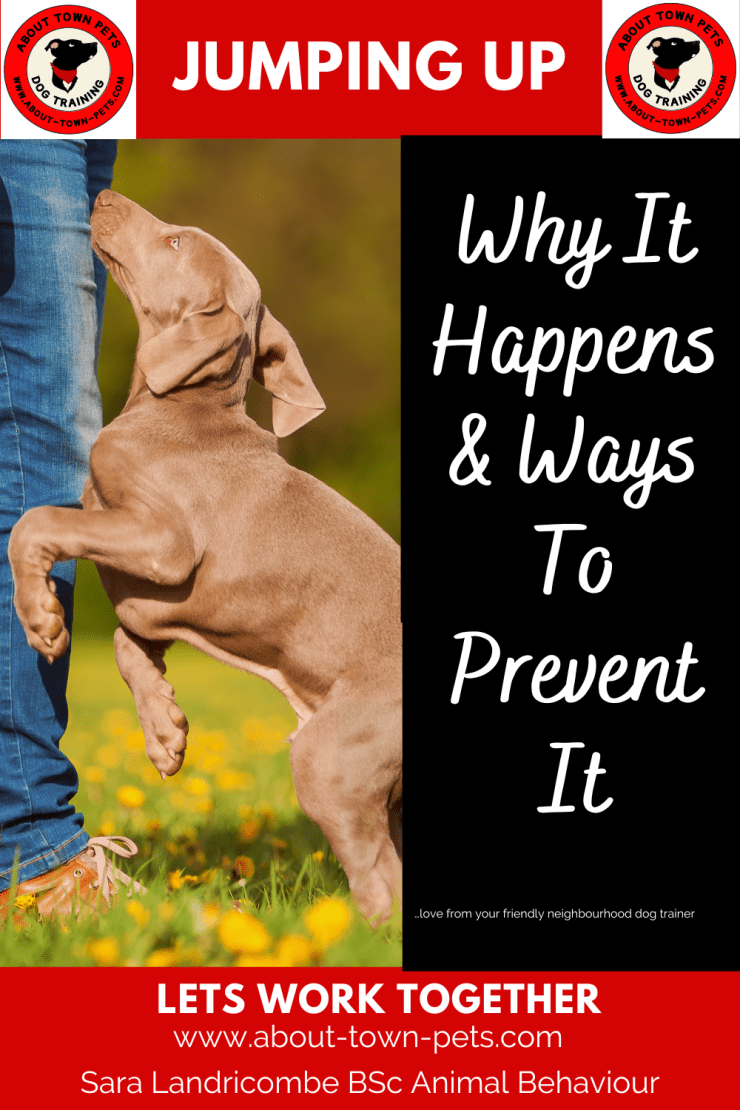
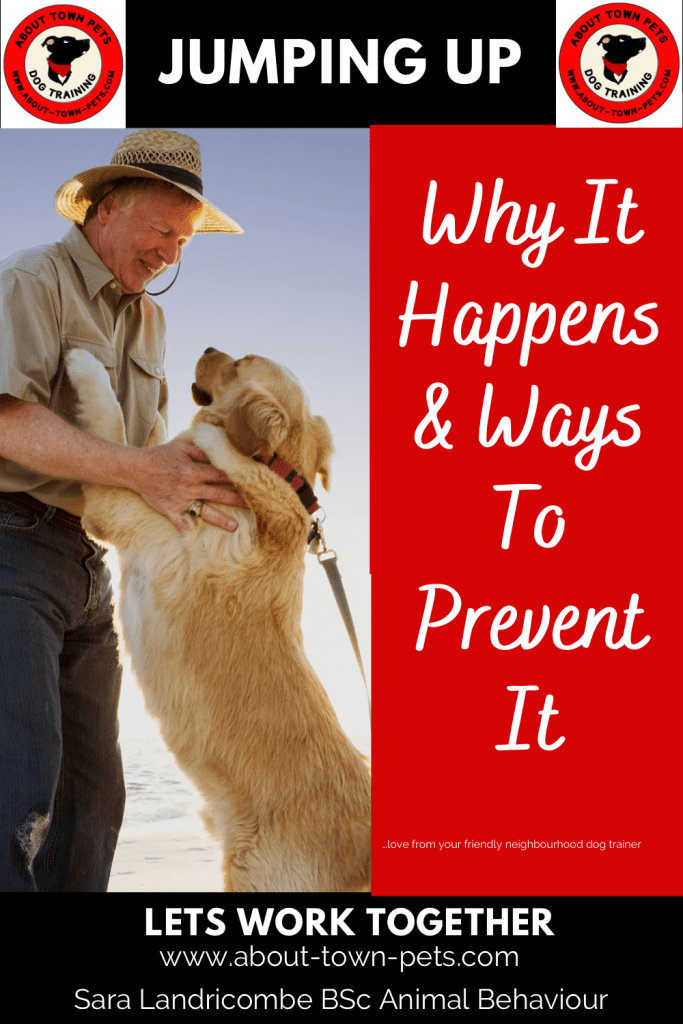
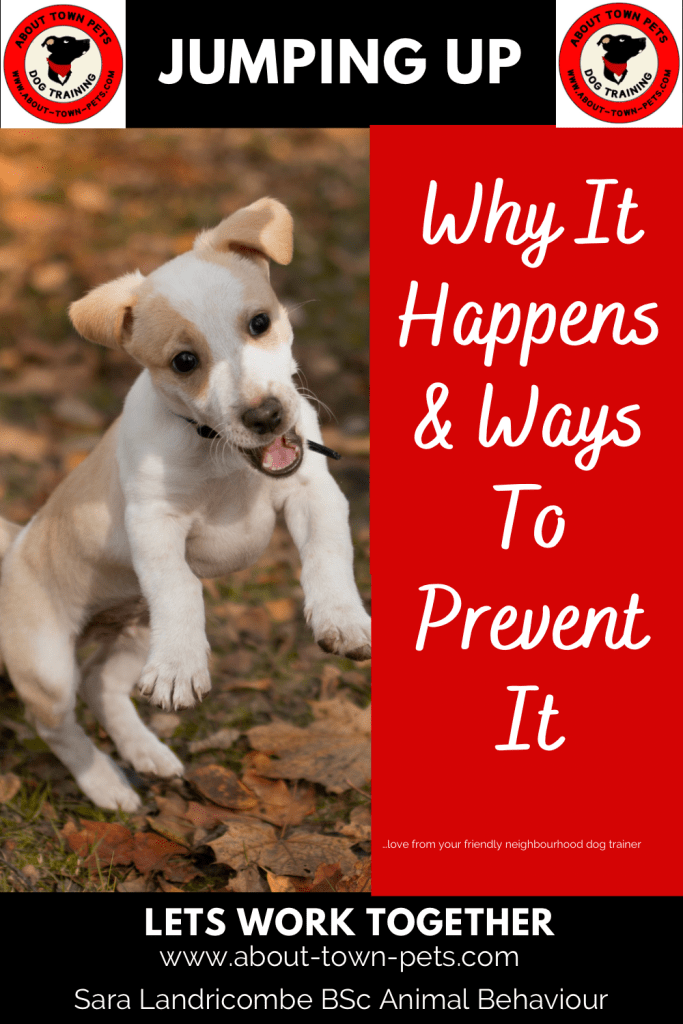
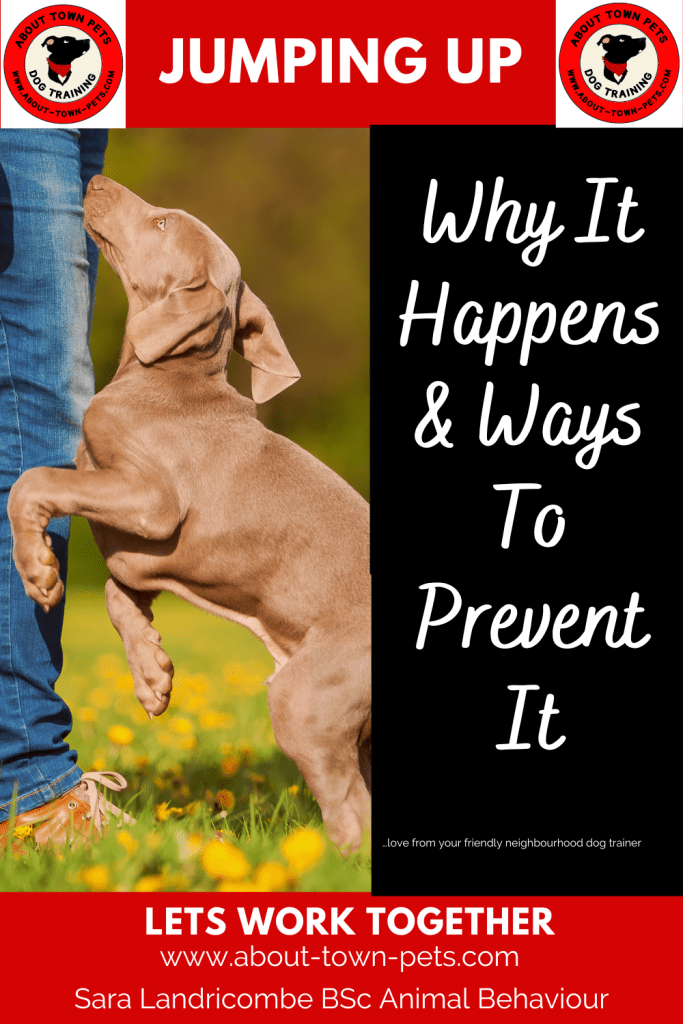
Jumping Up -Why It Happens and How To Tackle A Common Issue

If your once well-behaved puppy suddenly seems to forget everything they’ve learned, you’re not alone. The adolescent phase — usually between 6 to 18 months — can bring a wave of new challenges as your dog’s brain and body mature. Think of it as the teenage phase of their development: hormones, distractions, and big feelings all at once!

One of the most common issues owners face during this stage is jumping up — especially around people. The good news? With management, consistency, and a well-practised alternative behaviour, your dog can absolutely learn better ways to greet.


Why Does It Happen?

Jumping up is natural for dogs. They do it to get attention, greet face-to-face, or release excitement. During adolescence, impulse control dips while energy and social motivation soar — not the best combo! Add in the fact that new people, places, and smells are super stimulating, and it’s easy to see why polite manners can vanish overnight.


Step 1: Manage Before You Train

Use management to prevent unwanted rehearsals of the behaviour. Keep greetings calm and controlled — use a lead or long line, create space, and avoid letting the dog practise jumping.
This isn’t forever! It’s just until your teen pup is emotionally mature enough to handle more stimulation without losing focus.


Step 2: Train an Alternative Behaviour

Start at a distance where your dog can succeed. Practice a calm, incompatible behaviour such as:

  • An automatic sit
  • A “go to mat” or “place” cue
  • A relaxed settle on a bed

Reinforce these generously so they feel just as rewarding as saying hello by jumping.


Step 3: Keep Rewards Low

Always deliver rewards on the floor. This prevents your dog from anticipating treats coming from above — which can encourage more jumping. It is inevitable if everything fun happens at waist height then the dog is much more likely to want to get to the exciting thing more quickly by jumping up as excitement builds so get into the habit of asking your dog to “Find It” on the floor initially.


Step 4: Repetition Builds Reliability

Consistency is everything. It takes around 3–4 weeks for old habits to fade and new ones to stick.
And remember: one excitable jump can set you back a few practice sessions — so think long-term, not instant results.

A great rule of thumb: train 100 reps for the time you’ll need that 101st in real life. Build the muscle memory before you need it.


Step 5: Check the Motivation

Ask yourself:

  • Is my dog overstimulated by people or the environment?
  • Do they know how to switch off?

Try visiting public places to practise simply watching and settling. Start with 5–10 minutes at a distance, then gradually work closer as your dog learns to stay calm.


Final Thoughts

A well-timed “sit” or “what’s this?” is always more effective than shouting “no.” When dogs understand what’s expected, they feel secure — and calm dogs make better choices.

Adolescence can be challenging, but it’s also an opportunity to deepen your bond through patience, practice, and clear communication.

If you’d like to learn more about why adolescent dogs behave this way and how to support them through it, join my Teen Dog Behaviour Webinar on Wednesday nights — dates for the next rotation of webinar topics can be found below👇 🐾

And if you found this blog helpful you might also like my previous blog post in the Seven Most Common Issues In Puppy Training 👇

Part 4- Nipping & Biting – the teething timeline

Part 5- Pulling – Getting started with loose lead
… love from your friendly neighbourhood dog trainer – S

If you want to work with me 1-2-1 please check out my Training & Behaviour Questionnaire Link To Get Started HERE 🐶